The kitchen is one of the busiest rooms in the home. It handles food spills, muddy shoes, dropped utensils, pets, children, chairs moving in and out, cleaning products, water splashes and constant foot traffic. Because of that, kitchen flooring needs to do much more than simply look good.
It needs to be practical, easy to clean, comfortable underfoot and durable enough for everyday life.
That is why many UK homeowners ask: is LVT flooring good for kitchens?
The short answer is yes, LVT flooring can be an excellent choice for kitchens. Luxury Vinyl Tile, commonly known as LVT, gives you the look of natural wood, stone or tile while offering the everyday benefits of vinyl flooring. It is stylish, water-resistant, comfortable, low maintenance and available in a wide choice of designs.
However, like any flooring product, it needs to be chosen and fitted correctly. The right kitchen LVT depends on the type of kitchen, your subfloor, your preferred design, your budget and whether you choose click LVT or glue-down LVT.
In this guide, we explain everything UK homeowners need to know before choosing LVT flooring for a kitchen, including the pros, cons, best styles, installation advice and cleaning tips.
What Is LVT Flooring?
LVT stands for Luxury Vinyl Tile. It is a modern vinyl flooring product designed to recreate the appearance of natural materials such as wood, stone, slate, concrete, marble and ceramic tile.
Even though it is called “tile”, LVT comes in both tile and plank formats. Wood-effect LVT usually comes as planks, while stone-effect and marble-effect LVT often come as tile shapes.
A typical LVT floor is made from several layers. These usually include a protective wear layer, a printed design layer, a core or backing layer and a base layer. The wear layer helps protect the floor from everyday use, while the design layer gives the flooring its realistic wood or stone appearance.
For kitchens, LVT is popular because it combines style with practicality. It can give you a premium look without the cold feel of ceramic tiles or the maintenance concerns of real wood.
Yes, LVT is very suitable for kitchens when the correct product is chosen and installed properly.
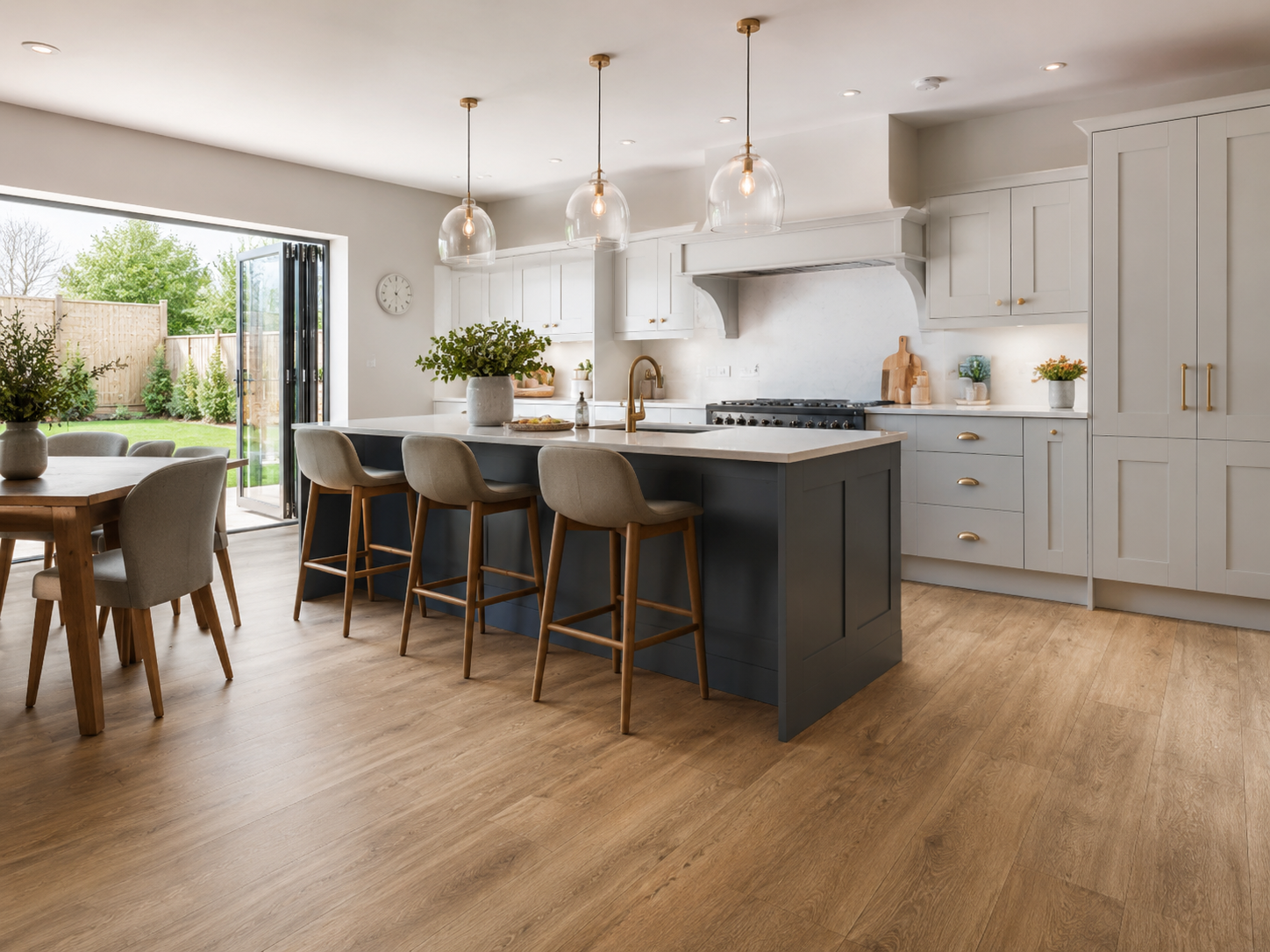
Kitchens are moisture-prone spaces, but they are different from wet rooms. A kitchen floor may deal with spills, splashes and cleaning, but it should not normally have standing water for long periods. This makes LVT a practical option for most domestic kitchens.
LVT is especially popular in:
It is also a strong choice if you want the appearance of real wood flooring but need something more practical for everyday kitchen use.
Kitchens naturally involve spills. Water from the sink, cooking oil, sauces, tea, coffee, pet bowls and children’s drinks can all end up on the floor.
LVT is designed to handle everyday moisture better than many wood-based floors. This makes it a sensible choice for a room where spills are expected.
That said, spills should still be cleaned quickly. No kitchen floor should be left wet for long periods, especially around edges, joins and appliances.
One of the biggest advantages of LVT in kitchens is simple maintenance.
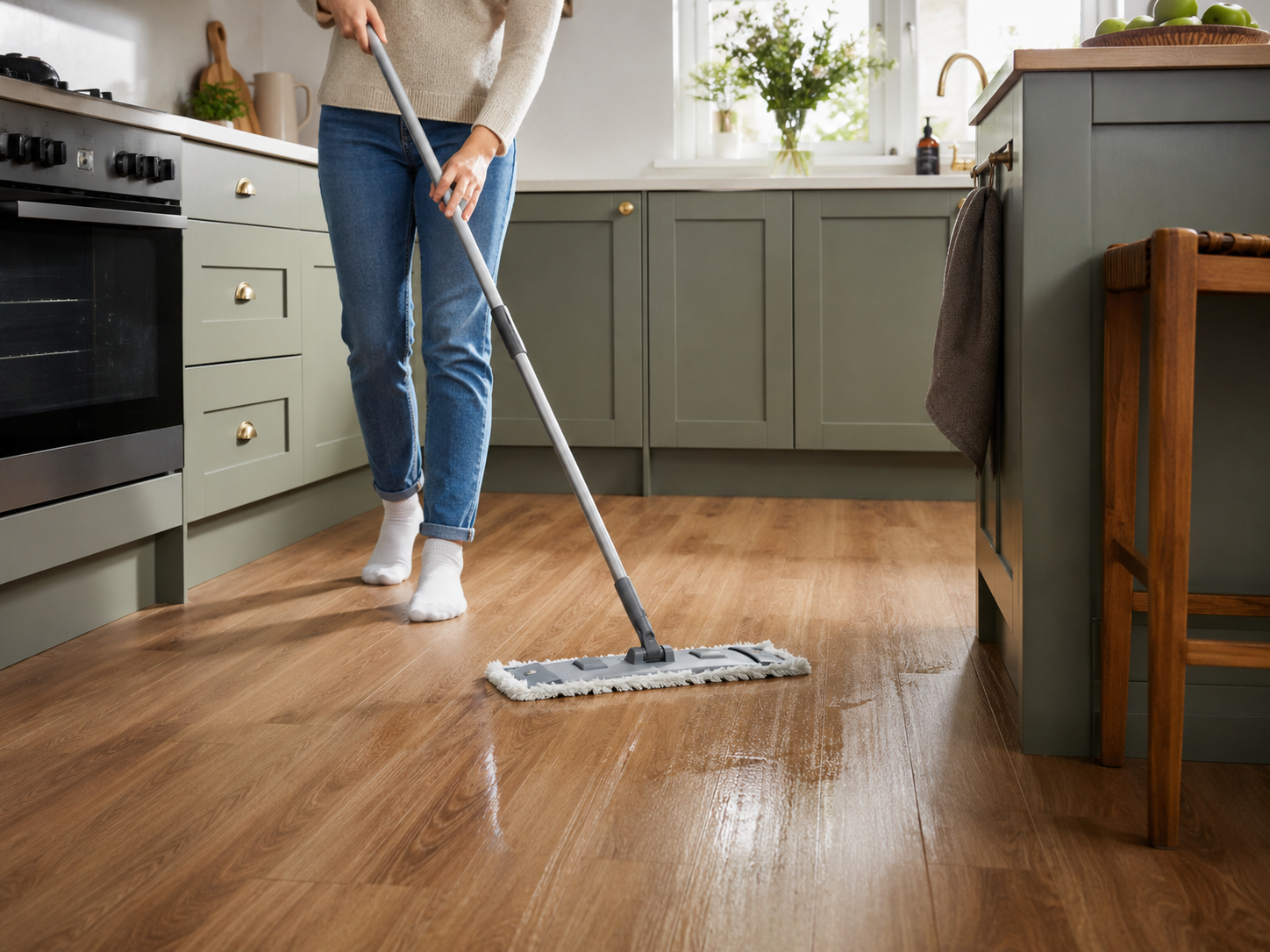
For everyday cleaning, you can usually sweep, vacuum and damp mop the floor with a suitable neutral cleaner. This makes LVT easier to manage than carpet and less demanding than many natural materials.
Because kitchens can collect crumbs, grease, dust and grit, easy cleaning is a major benefit. LVT gives homeowners a practical surface that can be kept looking fresh with regular care.
Ceramic and porcelain tiles are popular in kitchens, but they can feel cold and hard underfoot. LVT usually feels warmer and slightly softer, which can make a big difference in a kitchen where you may stand for long periods while cooking or washing up.
This makes LVT a comfortable option for family homes, especially during colder UK months.
Modern LVT can look very realistic. You can choose wood-effect planks, stone-effect tiles, concrete looks, marble designs or herringbone layouts.
This gives homeowners a lot of design freedom. You can create the appearance of a natural oak kitchen floor without using real wood, or achieve a stone tile look without the cold feel of stone.
Many UK homes now have open-plan kitchen, dining and living areas. LVT is ideal for this type of layout because it can run continuously through multiple zones.
Using the same floor across the kitchen, dining area and living space can make the room feel larger, cleaner and more connected.
Wood-effect LVT is especially effective in open-plan spaces because it brings warmth and flow to the room.
Kitchen floors often take a lot of punishment in family homes. Pets run in from the garden. Children drop food and drinks. Chairs scrape. Toys get dragged across the floor.
LVT is a practical choice because it is easy to wipe clean and does not trap dust or pet hair like carpet. A good-quality product with a strong wear layer can be suitable for busy households.
For pet-friendly kitchens, textured wood-effect or stone-effect LVT can be a smart choice because it can help disguise small marks and everyday dust better than very glossy floors.
Kitchen tiles look beautiful, but they are hard. If you drop a plate, glass or mug on ceramic tiles, it is likely to break. LVT has a slightly softer surface, which can make it more forgiving in day-to-day use.
This does not mean LVT cannot be damaged, but it can feel more comfortable and practical for everyday living.
LVT is a strong kitchen flooring option, but it is important to understand the possible disadvantages too.
LVT needs a suitable base. If the subfloor is uneven, damp, loose or poorly prepared, the finished floor may not perform properly.
Glue-down LVT usually needs a very smooth, clean and level surface. Any bumps or imperfections can show through the floor. Click LVT also needs a flat, stable base so the locking system is not stressed.
Good preparation is one of the most important parts of a successful kitchen LVT installation.
Kitchens often include heavy appliances such as fridges, washing machines, dishwashers and range cookers. These can put pressure on flooring.
When fitting LVT in a kitchen, appliance weight, movement and installation method should be considered. Heavy appliances should not be dragged across the floor, as this can scratch or damage the surface.
Furniture pads and careful handling are recommended.
Some kitchens have large patio doors, rooflights or south-facing windows. Strong sunlight and temperature changes can affect some flooring products.
If your kitchen gets a lot of direct sunlight, check whether the LVT is suitable for that environment. In some cases, a specific adhesive or product type may be recommended.
A cheap LVT product may not perform as well as a better-quality one. For kitchens, it is worth choosing a product with a suitable wear layer and a specification that matches the level of traffic in the room.
Kitchen flooring is not the best place to choose purely on the lowest price. Durability, fitting method and product suitability matter.
Kitchen LVT needs careful fitting around cabinets, doorways, appliances, islands and pipework. Poor cuts or gaps can affect the final appearance and long-term performance.
For best results, professional fitting is often recommended, especially for glue-down LVT or larger open-plan kitchens.
Both click LVT and glue-down LVT can work in kitchens, but they suit different projects.
Click LVT uses a locking system where planks or tiles click together. It is usually installed as a floating floor, meaning it is not glued directly to the subfloor.
Click LVT can be a good kitchen option if you want:
However, the subfloor still needs to be flat and stable. The click joints must be protected from movement, and the product must be suitable for kitchen use.
Glue-down LVT, also called dryback LVT, is fixed directly to the prepared subfloor with adhesive.
Glue-down LVT is often preferred for kitchens because it gives a stable, secure and professional finish. It is also ideal for herringbone patterns, borders and open-plan layouts.
Glue-down LVT can be a good kitchen option if you want:
The main requirement is excellent subfloor preparation. If the subfloor is not right, the finished floor may not look or perform as expected.
Wood-effect LVT is one of the most popular kitchen choices. It gives the warmth of real wood with the practical benefits of vinyl.
Popular wood-effect kitchen styles include:
Wood-effect LVT works especially well with shaker kitchens, neutral cabinets, open-plan spaces and modern family homes.
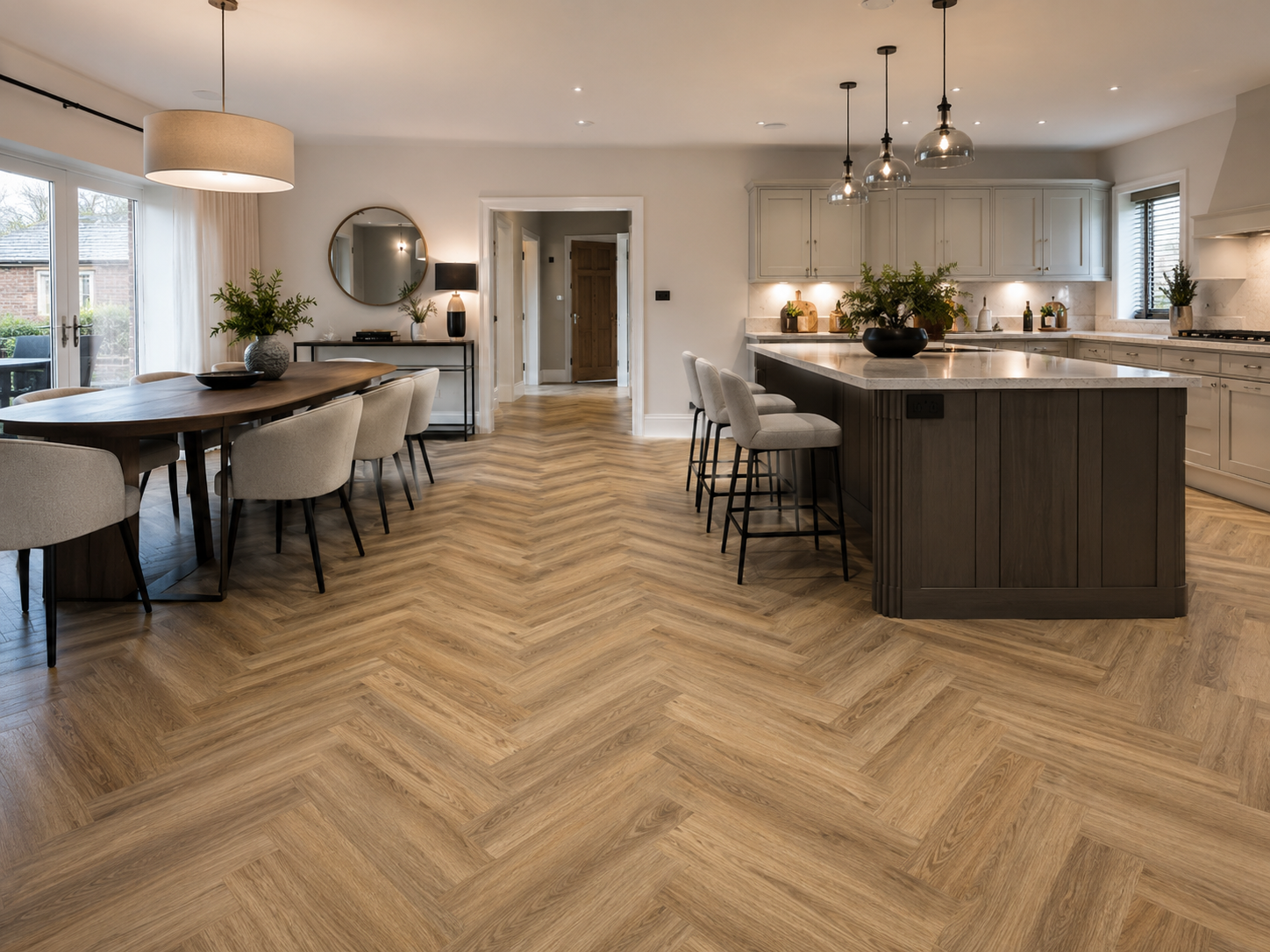
Herringbone LVT is a great choice if you want your kitchen to feel more premium. It creates movement and visual interest while still feeling timeless.
It works particularly well in:
Natural oak herringbone is one of the most versatile options because it pairs well with white, cream, navy, green, grey and black kitchens.
Stone-effect LVT is ideal if you like the look of tiles but want something warmer and easier to live with.
Popular stone-effect kitchen styles include:
Stone-effect LVT works beautifully in modern kitchens, farmhouse kitchens and utility rooms.
Concrete-effect LVT is perfect for contemporary kitchens. It gives a clean, minimal look and pairs well with handleless cabinets, black fittings, industrial lighting and open-plan spaces.
Soft grey concrete is a safe choice if you want a modern look without making the room feel too dark.
Marble-effect LVT can work well in luxury kitchens, especially when paired with simple cabinets and elegant lighting.
It is best used carefully, as very bold marble patterns can dominate the space. Subtle veining often looks more premium and timeless.
Patterned LVT can add character to smaller kitchens, utility rooms and pantry areas. It is useful if you want a decorative tile look without using ceramic tiles.
This style works especially well in:
The best colour depends on the style of your kitchen, but some colours are especially popular in UK homes.
Good kitchen LVT colours include:
For small kitchens, lighter colours can make the room feel bigger and brighter. For large open-plan kitchens, warmer oak tones can make the space feel more welcoming.
If you have dark cabinets, a lighter floor can create contrast. If you have white or cream cabinets, natural oak or stone-effect LVT can add warmth.
In many kitchens, LVT is more practical than standard laminate because it handles moisture better.
Laminate usually has a wood-based core. If water gets into the joints, some laminate products can swell or become damaged. Water-resistant laminate products are available, but LVT is generally the safer choice for moisture-prone areas.
If you want a wood-effect kitchen floor, LVT is often a more suitable option than standard laminate.
LVT and tiles both have advantages.
Tiles are very durable and can be excellent for kitchens. However, they can feel cold, hard and unforgiving. They also have grout lines, which can collect dirt over time.
LVT is warmer, softer, easier to stand on and available in realistic tile and stone looks. It is also often easier to clean because it does not usually have deep grout lines.
Choose tiles if you want a traditional hard tile floor. Choose LVT if you want comfort, easy cleaning and design flexibility.
Sheet vinyl can be a practical and affordable kitchen flooring choice. It is available in large rolls and can work well in simple kitchens, rental homes and budget renovations.
LVT usually gives a more premium look because it comes in individual planks or tiles. It can create more realistic wood, stone and herringbone effects.
If budget is the main priority, sheet vinyl may be worth considering. If you want a higher-end kitchen finish, LVT is usually the stronger design choice.
This depends on the product type, installation method and manufacturer guidance.
Glue-down LVT is often fitted before or around kitchen units depending on the project. Click LVT, as a floating floor, may need more careful planning because it requires room to move slightly. Heavy fixed units can sometimes restrict floating floors.
If you are installing a new kitchen and new flooring at the same time, speak to your fitter before deciding the order of work. The right approach can depend on whether the floor is click or glue-down, whether the units are already installed and how the room is being finished.
Many LVT products can be used with underfloor heating, but not all. You must check the flooring specification before buying.
The flooring, adhesive, underlay and heating system must all be compatible. There may also be a maximum floor temperature that should not be exceeded.
Underfloor heating can work very well with kitchen LVT, especially in open-plan spaces, but it needs to be planned properly.
Kitchen LVT is easy to maintain, but regular care will help it last longer and look better.
For everyday cleaning:
Grit is one of the biggest causes of small scratches, so regular sweeping is important in kitchens that connect to gardens, patios or hallways.
Before buying kitchen LVT, ask these questions:
Always order samples before making a final decision. Kitchen lighting can change the appearance of flooring throughout the day, especially with grey, beige and wood-effect finishes.
Yes, for many UK homeowners, LVT is worth it for kitchens.
It gives you a stylish floor that is practical for everyday family life. It is easier to clean than carpet, warmer than tiles and generally more suitable for kitchens than standard laminate. It also offers a wide choice of designs, from classic oak to modern stone and herringbone styles.
The key is choosing the right product and fitting method. A good-quality LVT floor installed properly can completely transform a kitchen and make the space easier to live with.
Yes, LVT flooring is a very good choice for kitchens. It is practical, stylish, water-resistant, easy to clean and comfortable underfoot. It works well in busy family kitchens, open-plan spaces, modern apartments, utility rooms and pet-friendly homes.
Wood-effect LVT is ideal if you want warmth and a natural look. Stone-effect LVT is perfect if you prefer a tile-style finish. Herringbone LVT is a strong option if you want a more premium design.
The most important thing is to match the flooring to the room. Check the product specification, prepare the subfloor properly and choose a fitting method that suits your kitchen.
At Casa Flooring, you can explore a wide range of LVT, vinyl flooring, underlay, adhesives, screeds, trims and flooring accessories to help create a kitchen floor that looks beautiful and performs well every day.
Yes, LVT flooring is a good choice for kitchens because it is water-resistant, easy to clean, comfortable underfoot and available in realistic wood, stone and tile designs.
Many LVT products handle kitchen spills and splashes very well. However, spills should still be cleaned quickly, and the flooring must be fitted correctly to protect edges and joins.
Yes, some click LVT products are suitable for kitchens. The subfloor must be flat and stable, and the product must be approved for kitchen use.
Glue-down LVT is often preferred for kitchens because it gives a stable, professional finish and works well for herringbone, borders and open-plan layouts.
In many cases, yes. LVT is usually more suitable for kitchens than standard laminate because it handles moisture better.
LVT is warmer and more comfortable underfoot than ceramic or porcelain tiles. Tiles are very durable, but LVT is often easier to live with in busy family kitchens.
Yes, LVT is ideal for open-plan kitchen diners because it can run continuously through the kitchen, dining and living areas for a clean, seamless look.
Wood-effect, stone-effect, concrete-effect and herringbone LVT are all popular kitchen choices. The best style depends on your cabinets, worktops and overall interior design.
Many LVT products can be used with underfloor heating, but you must check the product specification and temperature guidance before installation.
Sweep or vacuum regularly, wipe up spills quickly and damp mop with a suitable neutral cleaner. Avoid steam cleaners, abrasive pads and harsh chemicals unless approved by the manufacturer.