Bathroom flooring has to work harder than almost any other floor in the home. It needs to handle splashes, humidity, bare feet, daily cleaning, toiletries, towels, bath mats and regular temperature changes. At the same time, most homeowners still want the room to look stylish, warm and relaxing.
This is why many UK homeowners ask the same question before renovating: is LVT flooring good for bathrooms?
The short answer is yes, LVT can be an excellent choice for bathrooms, provided you choose the right product and have it fitted correctly. LVT, also known as Luxury Vinyl Tile, offers the look of stone, wood, marble or ceramic tile with a warmer, softer and more practical feel underfoot.
It is a popular alternative to traditional tiles because it is easier to live with, usually more comfortable under bare feet and available in a wide range of bathroom-friendly designs. However, like any flooring product, it is not perfect for every situation. Installation quality, subfloor preparation, product suitability and room type all matter.
In this guide, we explain the pros and cons of LVT bathroom flooring, where it works best, where to be careful, and the best LVT styles for modern UK bathrooms.
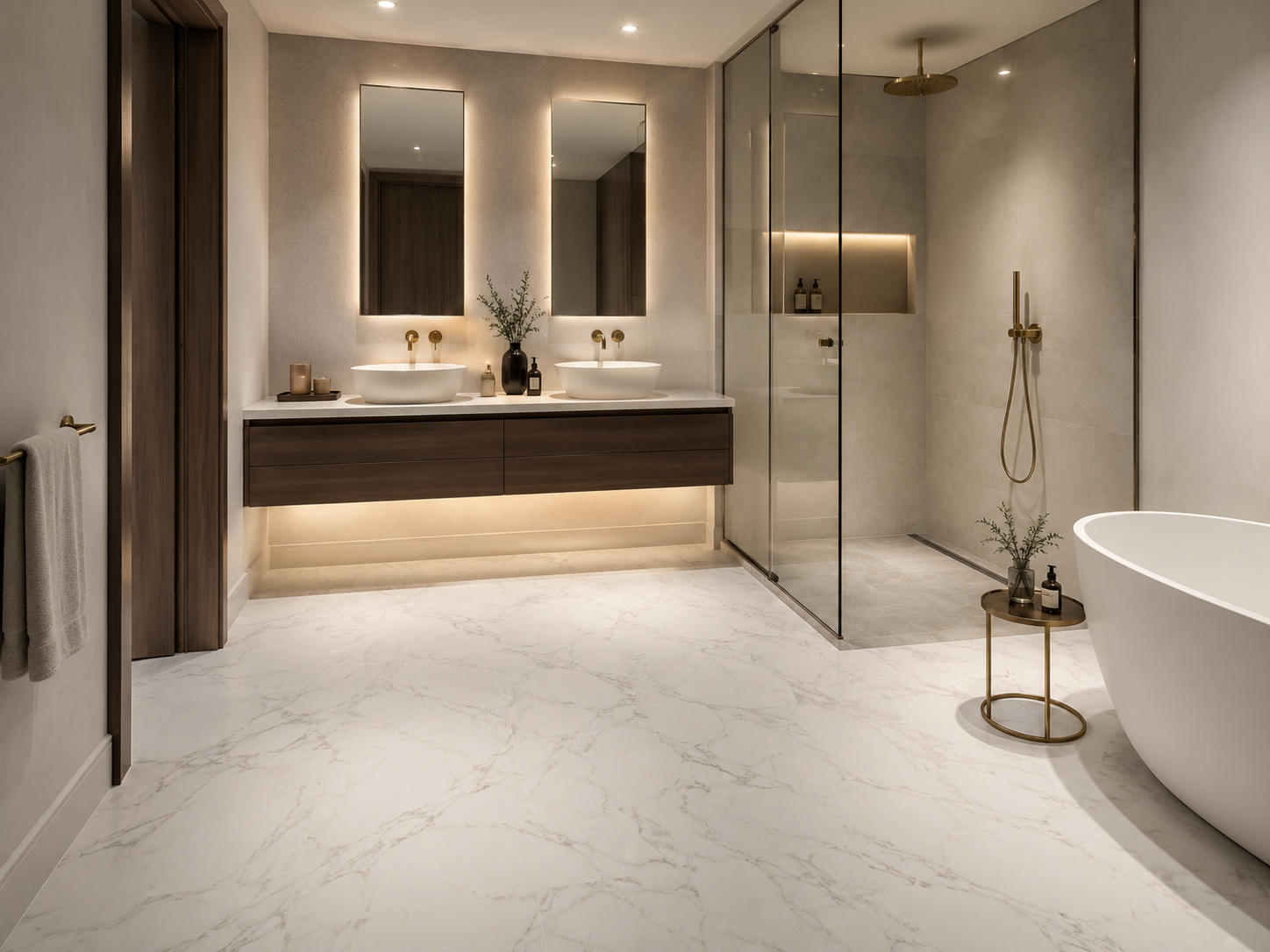
LVT stands for Luxury Vinyl Tile. It is a modern vinyl flooring product designed to replicate natural materials such as stone, wood, slate, limestone, concrete, marble and ceramic tiles.
Although it is called “tile”, LVT can come in tile shapes or plank formats. Bathroom LVT is often chosen in stone-effect tiles, marble-effect designs or soft wood-effect planks.
LVT is made from multiple layers. These usually include a protective wear layer, a printed design layer, a core or backing layer and a base layer. The top wear layer helps protect the floor from everyday use, while the design layer creates the realistic appearance.
For bathrooms, the main appeal is simple: LVT gives you a practical water-resistant floor without sacrificing style.
Yes, many LVT products are suitable for bathrooms. In fact, LVT is one of the most popular bathroom flooring choices for homeowners who want something warmer and easier to maintain than ceramic or porcelain tiles.
Bathrooms are moisture-prone spaces, so the product must be suitable for that environment. The flooring itself may handle water well, but the full installation is just as important. Edges, joins, adhesive, subfloor and sealing details can all affect performance.
For a standard family bathroom, ensuite or downstairs toilet, LVT can be a very practical option. For wet rooms or open shower areas where water regularly sits on the floor, you must check the manufacturer’s guidance carefully. Some LVT products are suitable for bathrooms but not suitable for wet rooms.
This difference is important. A bathroom floor may deal with splashes. A wet room floor may deal with direct shower water, drainage and standing moisture. These are not the same flooring conditions.
One of the biggest reasons homeowners choose LVT for bathrooms is water resistance. LVT is designed to handle everyday bathroom splashes better than many wood-based floors.
This makes it a strong choice for:
However, water resistance does not mean the installation can be ignored. Water should not be allowed to sit for long periods, and the flooring should be fitted according to the product instructions.
Ceramic and porcelain tiles can look beautiful, but they often feel cold under bare feet, especially during winter. LVT usually feels warmer and more comfortable.
This makes a noticeable difference in bathrooms, where you often walk barefoot. LVT can help create a softer, more inviting feel without needing thick bath mats everywhere.
If you want a spa-style bathroom that feels comfortable as well as stylish, LVT is a strong option.
Bathrooms can feel echoey and hard when they are finished with lots of tile, glass and ceramic surfaces. LVT has a slightly softer feel than stone or ceramic, which can make the room feel quieter and more comfortable.
It is also more forgiving if you drop a toiletry bottle or hairbrush. Ceramic tiles are hard and can crack items easily. LVT is more resilient for everyday use.
LVT has improved massively in design quality. Modern bathroom LVT can look like:
This gives homeowners a huge amount of design flexibility. You can create a luxury hotel-style bathroom, a soft natural spa look, a modern industrial cloakroom or a warm traditional ensuite.
Bathroom floors need regular cleaning, and LVT is generally simple to maintain. Sweeping, vacuuming and damp mopping are usually enough for everyday care.
Unlike grout between ceramic tiles, LVT does not usually have deep grout lines that can collect dirt. This can make the floor easier to keep looking clean.
For busy family homes, this is a major benefit.
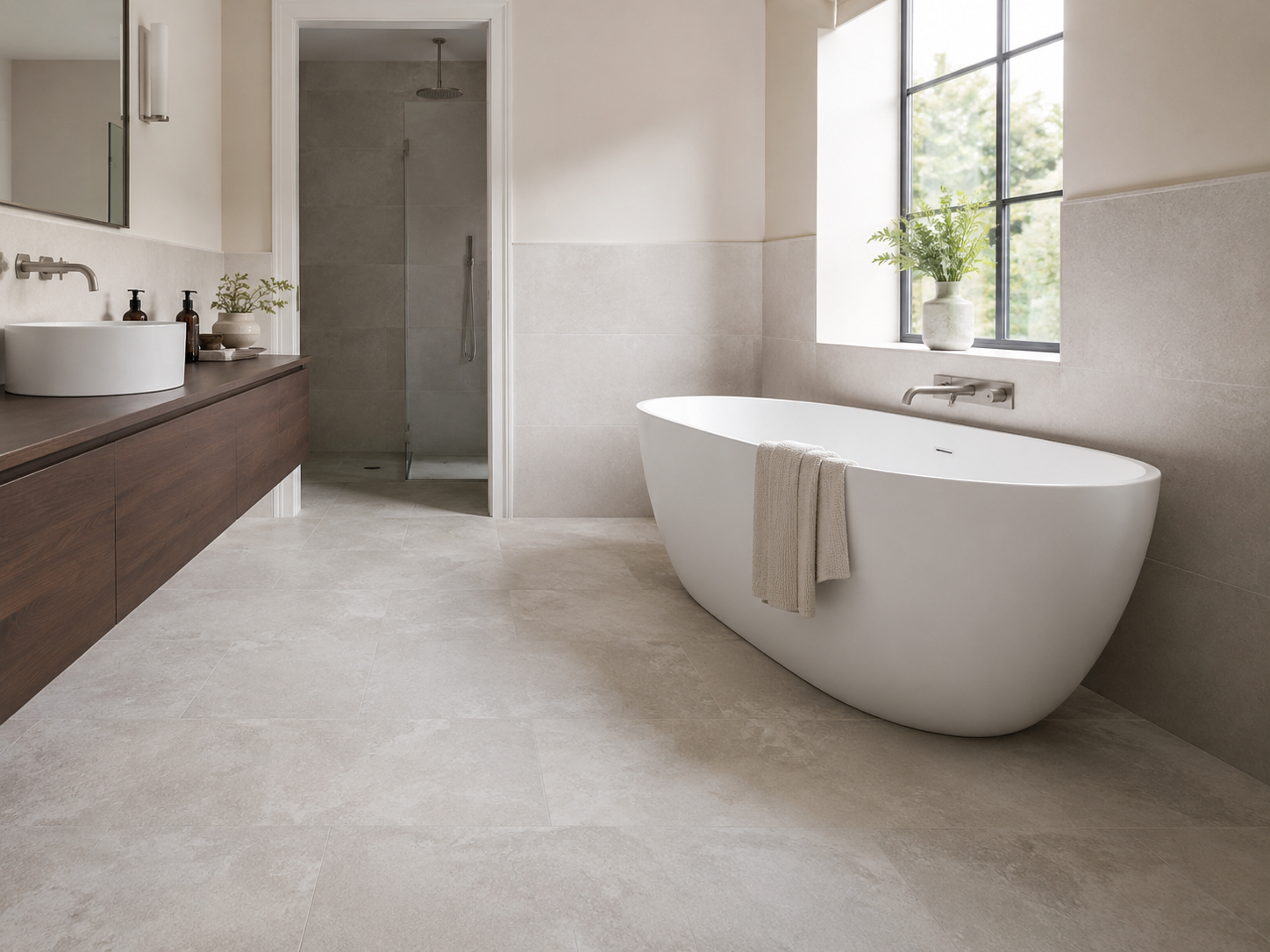
Small bathrooms can be difficult to design. The wrong flooring can make the room feel cramped or busy.
LVT can work very well in small spaces because it is available in soft neutral tones, light stone effects and plank designs that can visually lengthen the room. A pale limestone-effect LVT or light oak-effect plank can make a compact ensuite feel brighter and more open.
Many LVT products are compatible with underfloor heating, making them even more comfortable in bathrooms. However, compatibility depends on the product, adhesive, underlay and heating system.
Always check the product specification before buying. The floor temperature must usually stay within the manufacturer’s recommended limit.
Not all LVT products are designed for bathrooms. Some are better suited to dry rooms. Others are suitable for moisture-prone spaces but not for wet rooms.
Before buying, check whether the product is approved for bathroom use. This is especially important for click LVT, rigid core LVT and any floor being fitted near showers or baths.
Bathroom LVT must be installed carefully. Water can cause problems if it reaches the subfloor through gaps, badly finished edges or poor cuts around toilets, pipes and baths.
Professional installation is often recommended, especially for glue-down LVT. The fitter can prepare the subfloor correctly, use the right adhesive and finish edges neatly.
LVT needs a suitable base. If the subfloor is uneven, damp, loose or poorly prepared, the finished floor may fail.
For glue-down LVT, the subfloor usually needs to be smooth, dry, clean and level. In some homes, this may require smoothing compound, plywood, primer or moisture control.
Skipping preparation can lead to visible imperfections, lifting edges or poor adhesion.
LVT can offer slip-resistant qualities, but any bathroom floor can become slippery when wet. Water, soap, shampoo and bath products can all make the surface less safe.
If safety is a priority, look for bathroom-suitable LVT with good slip resistance and use bath mats where needed. Also wipe up standing water quickly.
LVT is durable, but it cannot be sanded or refinished like real wood. If the surface becomes badly damaged, the affected area may need repair or replacement.
The good news is that individual glue-down tiles or planks can often be replaced by a professional if you keep spare pieces from the original batch.
Both click LVT and glue-down LVT can be used in bathrooms, depending on the product and installation guidance.
Glue-down LVT is often a strong choice for bathrooms because it is bonded directly to the prepared subfloor. This gives a stable, secure finish.
It is also excellent for stone-effect tiles, marble-effect designs and detailed layouts. If you want a professional bathroom finish, glue-down LVT is usually the best option.
However, it requires careful subfloor preparation and correct adhesive. Professional fitting is strongly recommended.
Click LVT can be a good bathroom option if the product is approved for bathroom use. It is quicker to install and may work well in simple bathroom renovations.
However, because click LVT is a floating floor, the edges, expansion gaps and joins must be considered carefully. If water gets beneath the floor, it can still cause problems even if the plank itself is waterproof.
For bathrooms, always follow manufacturer guidance and avoid assuming that all click floors are suitable.
Stone-effect LVT is one of the best bathroom choices. It gives the look of limestone, slate or natural stone without the cold, hard feel.
This style works especially well in:
Popular colours include warm beige, soft grey, limestone cream and charcoal slate.
Marble-effect LVT is ideal if you want a luxury bathroom look without the cost and maintenance of real marble.
It pairs beautifully with:
For a premium look, choose subtle marble veining rather than an overly busy pattern.
Concrete-effect LVT is perfect for modern and industrial-style bathrooms. It gives a clean, contemporary feel and works well with black fittings, walk-in showers and simple wall tiles.
Soft grey concrete-effect LVT can make a bathroom feel calm and modern without feeling too cold.
Wood-effect LVT is popular because real wood is usually not the best choice for bathrooms. LVT allows homeowners to get the warmth of oak, walnut or weathered timber in a more bathroom-friendly format.
Light oak-effect LVT works beautifully in Scandinavian-style bathrooms, while darker wood tones can create a warmer, more traditional look.
Herringbone LVT can make a bathroom feel more expensive and design-led. It works particularly well in larger bathrooms, ensuites and cloakrooms where the floor is a visible feature.
A small herringbone pattern can add texture and movement without overwhelming the room.
Patterned LVT is a good choice for downstairs toilets and cloakrooms where you want more personality. It can create a Victorian tile effect, Moroccan-inspired look or decorative feature floor.
In small spaces, patterned floors can look stylish when paired with simple walls and neutral fixtures.
For UK bathrooms, the most versatile LVT colours are:
Light colours can make small bathrooms feel bigger. Darker shades can create contrast and drama, especially with white walls and black or brass fittings.
Before buying bathroom LVT, consider the following:
Always view samples in your own bathroom if possible. Bathroom lighting can change the appearance of flooring, especially with grey, beige and marble-effect designs.
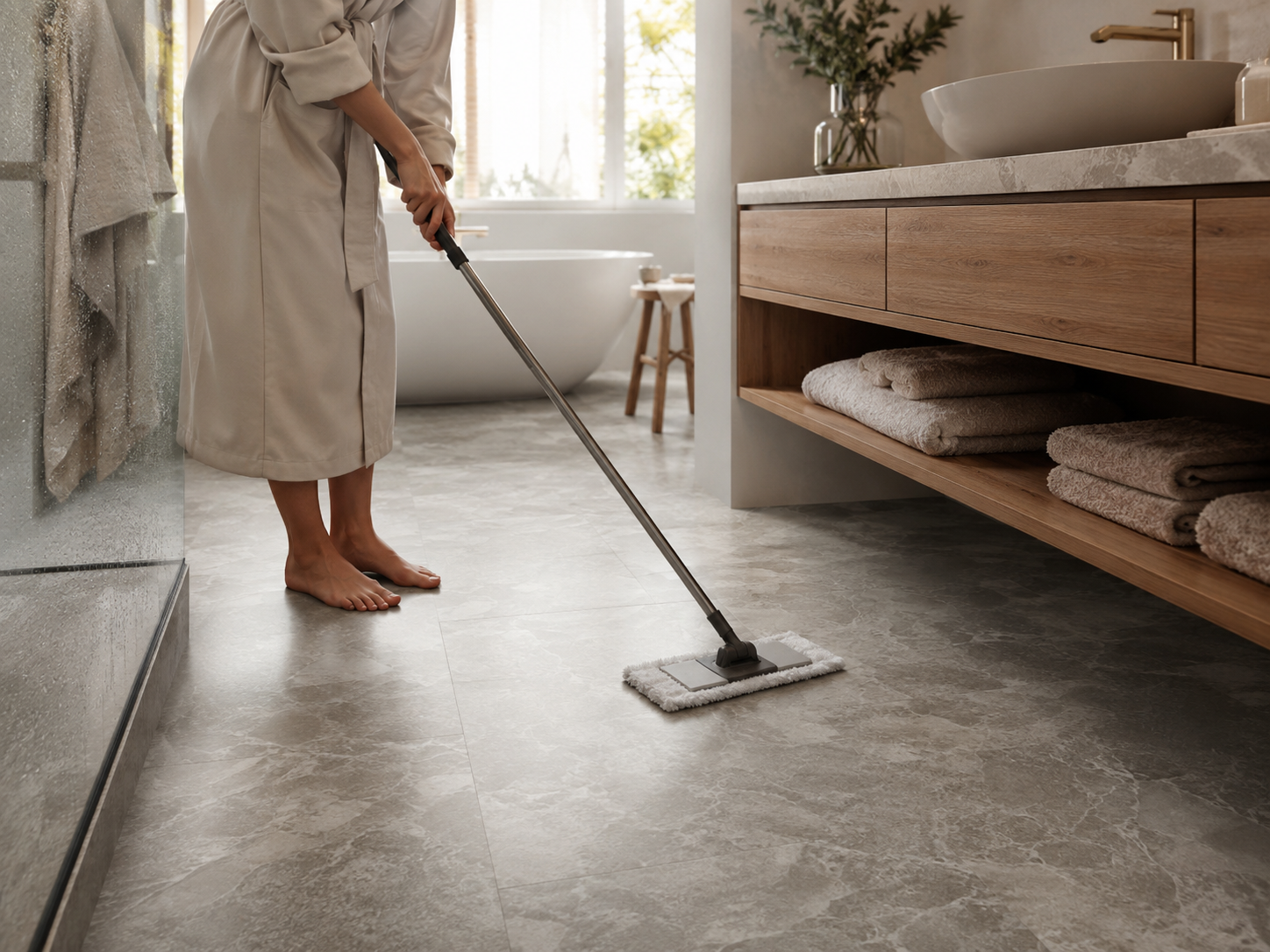
LVT is easy to care for, but bathroom floors need a little regular attention.
For best results:
Good ventilation is especially important in UK bathrooms, where condensation can build up quickly.
LVT and tiles both have advantages.
Tiles are extremely durable, fully hard-wearing and often the traditional choice for bathrooms. They are ideal for wet rooms and shower areas when installed correctly.
LVT is warmer, softer, usually easier to clean and often more comfortable underfoot. It is also available in realistic tile, stone and wood looks.
Choose tiles if you need a fully tiled wet room or shower floor system. Choose LVT if you want a stylish, practical and comfortable bathroom floor for a standard bathroom, ensuite or cloakroom.
In most cases, LVT is a better bathroom choice than standard laminate. Laminate usually has a wood-based core, which can swell if water gets into the joints.
Some water-resistant laminate products exist, but LVT is generally more suitable for moisture-prone areas.
If you want a wood-effect bathroom floor, LVT is usually the safer and more practical option.
Yes, LVT flooring can be an excellent choice for bathrooms. It is stylish, practical, comfortable underfoot and available in a huge range of realistic designs.
It is especially good for homeowners who want the look of stone, marble, tile or wood without the cold, hard feel of ceramic or the moisture concerns of real wood.
The key is to choose the right product and make sure it is fitted correctly. Bathroom flooring is not just about appearance. It also needs proper subfloor preparation, suitable adhesive or click system, careful edge finishing and good ongoing maintenance.
For standard bathrooms, ensuites and cloakrooms, LVT is one of the most practical and attractive flooring options available. For wet rooms, always check product suitability before buying.
At Casa Flooring, you can explore bathroom-friendly flooring styles, including luxury vinyl, LVT, stone-effect designs, wood-effect finishes and all the accessories needed for a clean, professional result.
Yes, LVT flooring can be very good for bathrooms because it is water-resistant, easy to clean, comfortable underfoot and available in realistic stone, tile, marble and wood designs.
Many LVT products are waterproof or highly water-resistant, but the installation still matters. Water should not be allowed to get beneath the floor through gaps, poor cuts or badly sealed edges.
Not all LVT is suitable for wet rooms. A normal bathroom and a wet room are different environments. Always check the manufacturer’s guidance before using LVT in a wet room or open shower area.
Some click LVT products are suitable for bathrooms, but not all. The product must be approved for bathroom use and installed correctly, especially around edges, toilets, baths and pipes.
Glue-down LVT is often preferred for bathrooms because it is bonded directly to the prepared subfloor and gives a stable, professional finish. However, it requires careful preparation and fitting.
Any floor can become slippery when wet. Many LVT products have slip-resistant qualities, but water, soap and shampoo can still make the surface slippery. Wipe up standing water and use bath mats where needed.
Stone-effect, marble-effect, concrete-effect and light wood-effect LVT are all popular bathroom styles. The best choice depends on your bathroom design and colour scheme.
Many LVT products can be used with underfloor heating, but you must check the product specification and maximum temperature guidance before installation.
In most cases, yes. LVT is generally better suited to bathrooms than standard laminate because it handles moisture more effectively.
Sweep or vacuum regularly, wipe up water quickly and damp mop with a suitable neutral cleaner. Avoid steam cleaners, harsh chemicals, bleach and abrasive pads unless approved by the manufacturer.