Kitchen flooring has a busy job. It needs to look good beside your cabinets while dealing with dropped food, moving chairs, regular cleaning and the occasional splash from the sink. Laminate is an appealing option because it offers convincing wood and stone looks at a range of price points. But is it practical in a kitchen?
Yes, laminate flooring can be a good choice for a kitchen—if you choose a range that the manufacturer approves for kitchen use and fit it correctly. Modern water-resistant products are designed to handle everyday splashes. Traditional laminate, however, is more vulnerable if water reaches its joints or sits on the floor for too long.
Here are the advantages, drawbacks and buying checks that matter most for a UK kitchen.
Laminate combines a decorative layer with a protective wear surface and a supportive core. It comes in a broad choice of plank sizes, colours and finishes, including oak effects that work well in both modern and traditional kitchens.
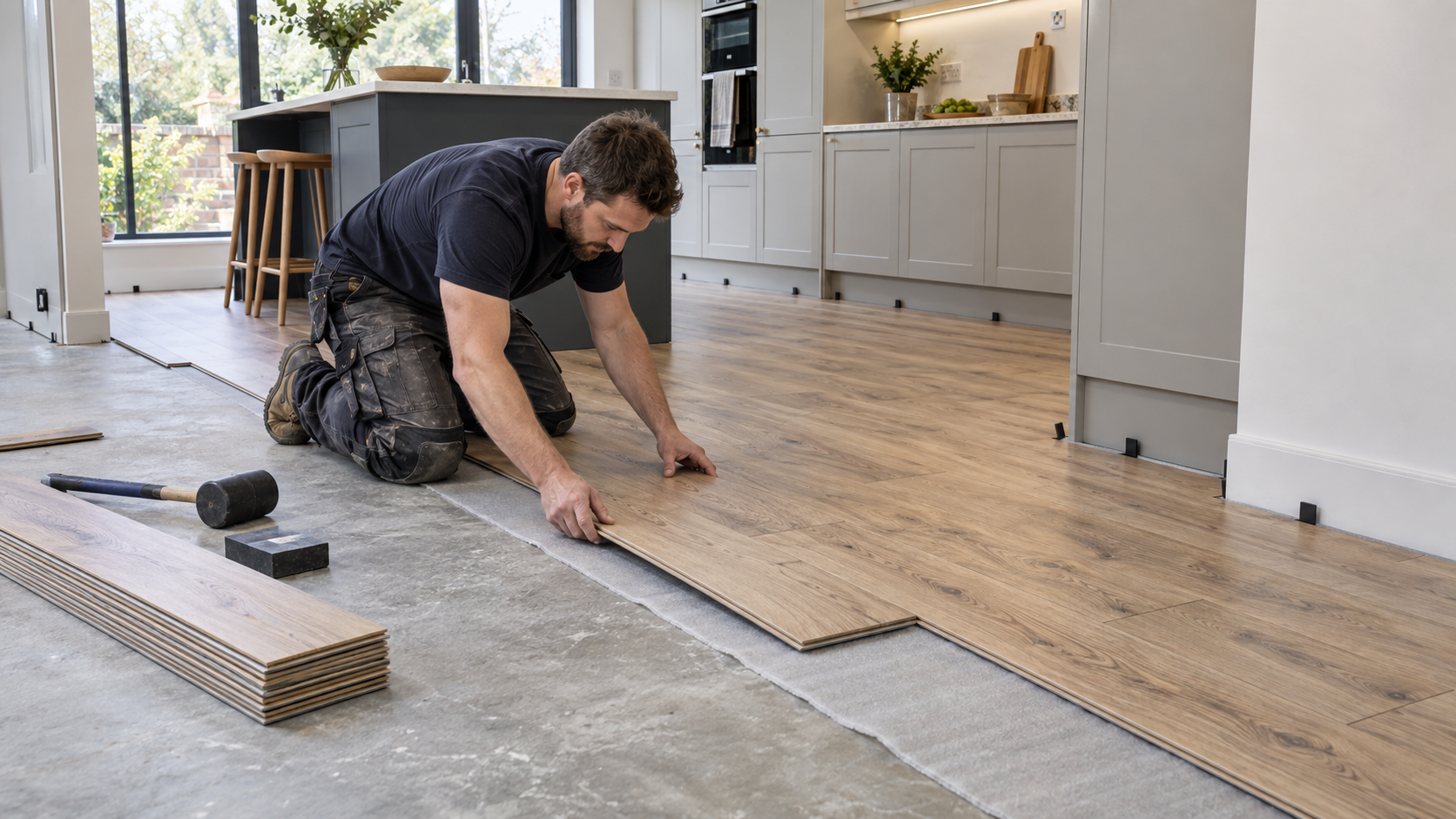
You can use it to create a continuous look from a kitchen into a dining or living area. Many ranges have click-fitting systems, although preparation, expansion gaps and edge finishing still need to follow the product instructions. The right underlay and a sound, dry subfloor are important too.
The main decision is not simply whether to buy laminate. It is which specific laminate product is suited to the room and how much water exposure you expect.
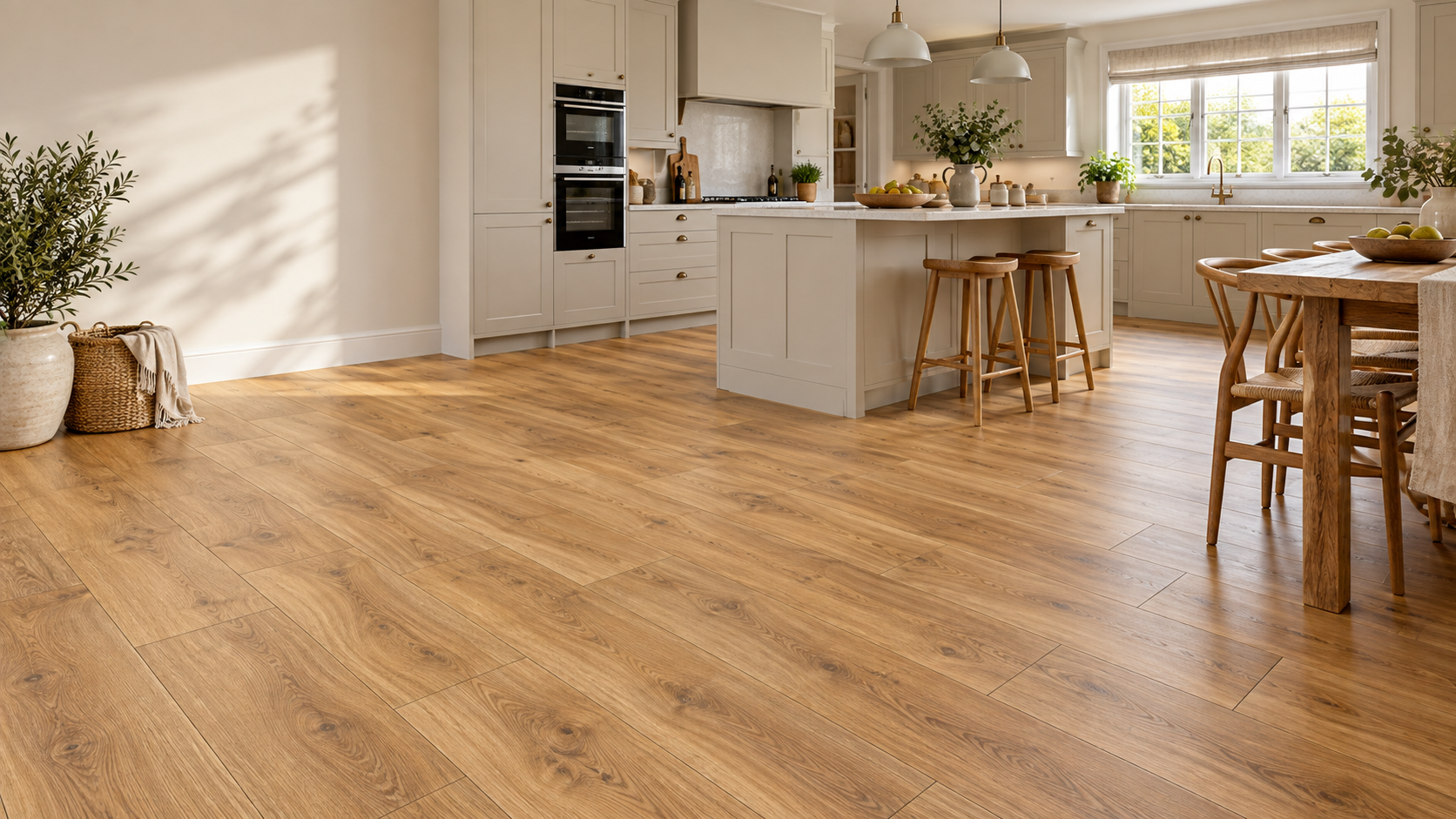
Laminate can reproduce the look of natural oak, darker woods, stone or tile. It gives you flexibility when matching cabinets and worktops, and it does not need sanding, oiling or refinishing as part of routine care. For an open-plan space, a wood-effect laminate can make the kitchen and adjoining room feel connected.
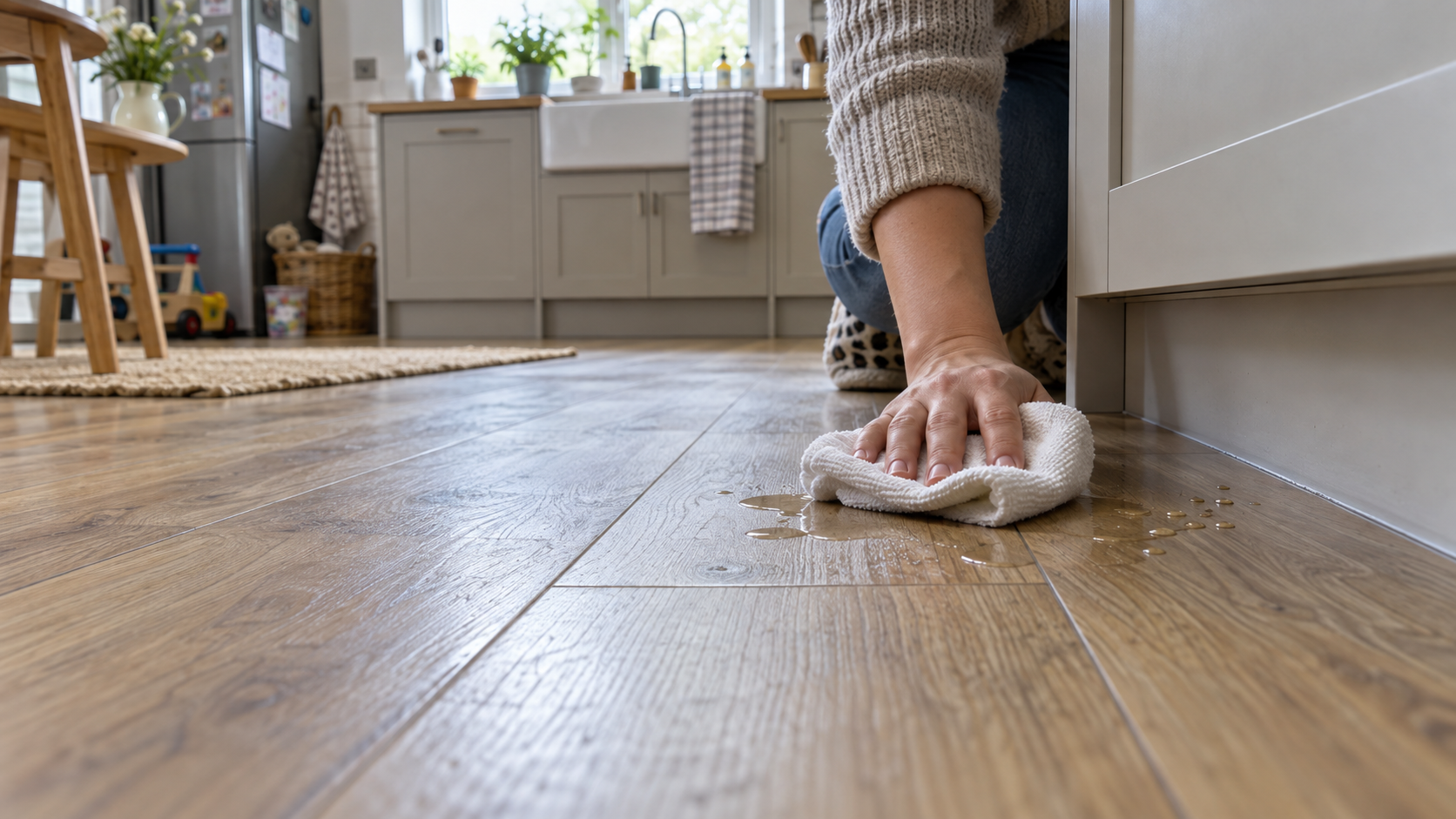
Crumbs and dust can usually be swept or vacuumed away, and many products can be cleaned with a lightly damp microfibre mop and an approved cleaner. Follow your chosen manufacturer’s guidance; there should be no pools of water left behind after cleaning.
Many kitchen-suitable laminate ranges have protective finishes intended to resist routine scratches, scuffs and stains. This can be useful around dining chairs and busy walkways. No floor is scratch-proof, so furniture pads and entrance mats are still sensible.
Laminate is sold across a broad range of prices, allowing you to compare appearance, wear performance and water protection within your budget. Remember to include underlay, trims, subfloor preparation and fitting when calculating the full cost.
Some laminate products have water-resistant edges, tighter click joints and cores designed to reduce swelling. Manufacturers such as Quick-Step and EGGER offer specific ranges approved for kitchens. Protection varies by product: check the exact conditions rather than assuming every pack offers the same level of water resistance.
The greatest concern is moisture reaching the board edges, joints or underside. A spill that is quickly wiped up is different from water left under a leaking dishwasher or around a sink for hours. Prolonged exposure can make a vulnerable core swell or leave edges raised. Even a water-resistant product has fitting and warranty conditions.
An appliance leak can spread below a floating floor before you notice it. A water-resistant top surface does not mean the subfloor, underlay or kitchen units are protected from a leak. Fix plumbing faults promptly and investigate water that appears repeatedly in the same spot.
You cannot sand and refinish laminate like solid wood. If a plank is badly swollen or chipped, repair may mean replacing the affected board. How easy that is depends on the location and installation layout.
Incorrect expansion gaps, an unsuitable underlay, a damp or uneven subfloor, or poor finishing at the perimeter can shorten the life of the floor. Kitchens also have door thresholds, pipes, appliances and fitted units that need careful detailing. Follow the manufacturer’s instructions around fixed cabinets and islands; a floating floor must be able to move as intended.
If the kitchen regularly has large spills, wet pet bowls, muddy garden traffic or frequent appliance leaks, you may prefer an alternative with a different moisture profile, such as a suitable LVT or tile floor. Those materials still require correct installation and subfloor preparation.
These words are used differently across product ranges. A manufacturer may describe a particular laminate as waterproof, water-resistant or protected against surface water for a stated period. Read the technical and warranty details for the exact range: the claim may apply to water on the surface under specified conditions, not to flooding, a persistent leak or moisture rising from the subfloor.
Standard laminate with a fibreboard core should not be assumed suitable for a kitchen merely because its top surface is easy to wipe. If you want laminate in a kitchen, look for clear manufacturer approval for that room and pay attention to the fitting details that support the water-resistance claim.
For a deeper explanation, see our guide: Is Laminate Flooring Waterproof? What UK Buyers Should Know.
Use this checklist while comparing products:
| Check | Why it matters |
|---|---|
| Kitchen approval | Confirms the range is intended for this type of room |
| Water-resistance terms | Explains the protection and its limits |
| Joint and edge design | Helps reduce water entering vulnerable areas |
| Wear suitability | Matches the floor to traffic, chairs and everyday use |
| Subfloor and underlay requirements | Supports performance and warranty conditions |
| Perimeter finishing instructions | Addresses edges around walls, pipes and thresholds |
| Care and warranty information | Shows what cleaning methods and conditions apply |
Ask for a sample before ordering. Check its colour against your kitchen cabinets in daylight and artificial light, and consider whether its surface texture will suit your household.
Laminate may be the right choice if you want a convincing timber look, a choice of styles and a kitchen-approved product that can handle ordinary daily use. You should still wipe spills promptly and follow the fitting guidance.
LVT is an alternative if you expect more frequent splashes. Its vinyl-based construction does not have the same fibreboard-core swelling issue, although water beneath a floor can still affect the installation or subfloor. Gluedown and click LVT have different preparation and moisture requirements.
Tile can be very durable and well suited to wet cleaning, but it feels harder underfoot and its grout and subfloor preparation need consideration. The best choice comes down to your preferred look, budget, comfort and likely water exposure.
A few habits can help your floor keep its appearance:
These steps are useful even when you buy a product marketed as water-resistant. They also help protect the surrounding kitchen, not only the laminate.
Yes, for many UK homes. A well-chosen, kitchen-approved water-resistant laminate can combine a warm appearance, straightforward cleaning and good everyday practicality. Its limitations matter just as much: standing water, hidden leaks and poor installation can still cause damage.
Choose based on the exact product, your subfloor and how your household uses the kitchen. If moisture is a regular concern, compare laminate with LVT or tile before deciding.
At Casa Flooring, we can help you find a floor that looks right and works for your daily routine. Bring us your kitchen measurements and tell us how you use the space, and we can help you compare suitable laminate and alternative flooring options.