Herringbone flooring has a way of making a room feel considered. Its repeating zigzag pattern brings movement to a hallway, gives a kitchen extra character and adds warmth to an open-plan space. With luxury vinyl tile (LVT), you can explore that classic look in a broad range of wood and stone effects suited to modern UK homes.
But colour is only the beginning. Plank size, pattern direction, borders and the way one room flows into another all change the final effect. Here are ideas to help you choose a herringbone LVT floor that works for your space and the way you live.
Herringbone is made by laying rectangular planks or tiles in a staggered, interlocking arrangement. The short end of one piece meets the long side of another, forming a distinctive broken zigzag. It has the character of traditional parquet but can look equally at home beside flat-front cabinets, simple furniture and contemporary colours.
LVT offers many wood and stone looks and is generally easy to clean. Manufacturers offer both gluedown and rigid-core click herringbone ranges, although not every design comes in both formats. The right product depends on the room, the subfloor and the finish you want around edges and thresholds.
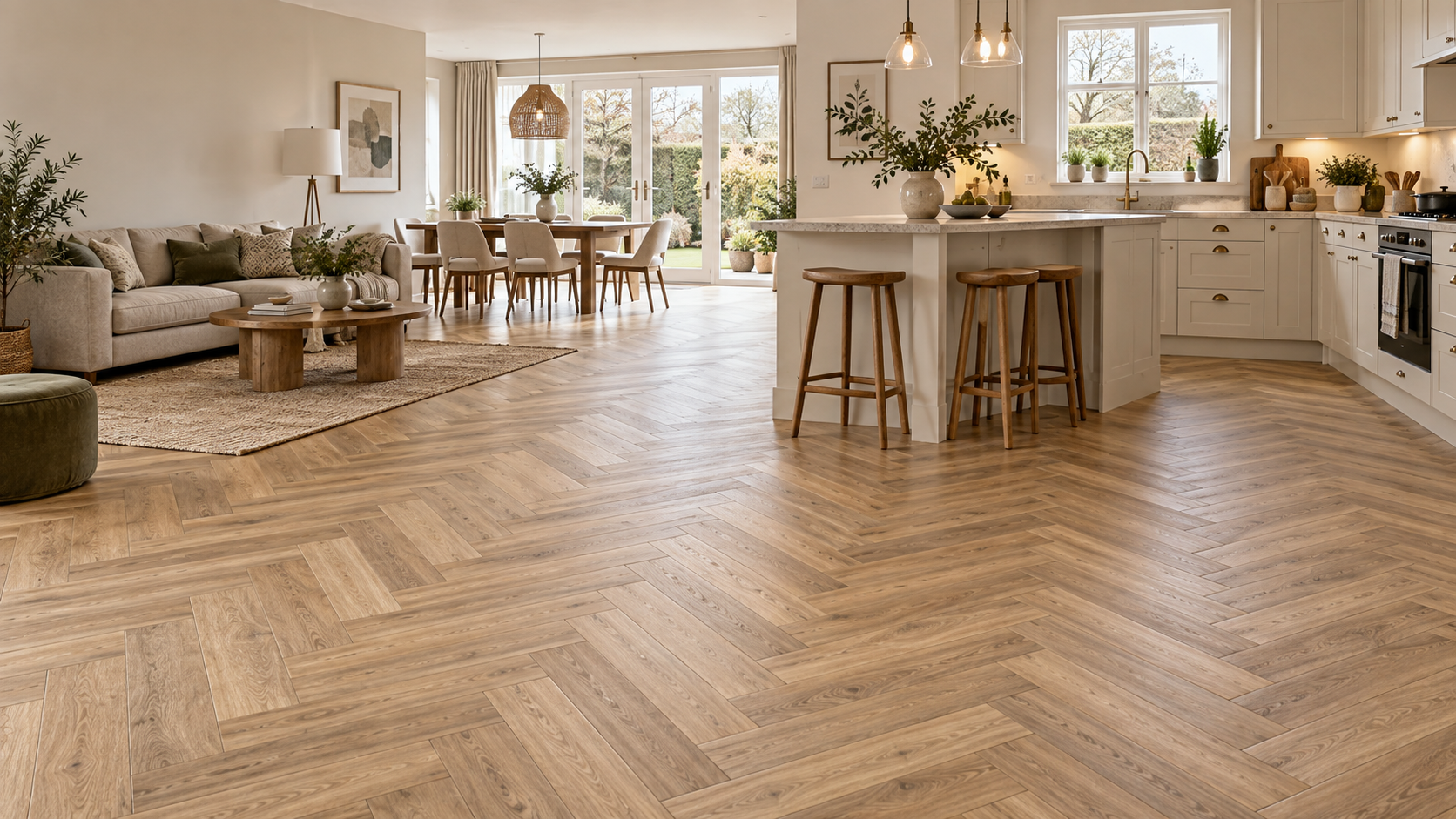
Pale oak-effect herringbone can make a compact room feel bright and welcoming. Try it with off-white walls, soft beige upholstery and natural fabrics for a calm look. The pattern gives the floor interest without requiring a dark or dramatic colour.
In a small hallway or home office, consider a restrained wood grain and a plank size that lets the pattern repeat several times across the floor. View a sample in the room first: a plank that looks subtle in a showroom can feel busy when multiplied across a narrow space.
A hallway is an ideal place to enjoy the geometry of herringbone. The pattern draws the eye along the space and adds personality before you reach the rest of the home. Mid-tone oak can work with period details, while a cooler wood effect suits a more minimal interior.
Plan where the pattern starts and how it meets doorways. In a narrow hall, the central line and cuts at the edges are particularly visible. Ask your fitter to show you a layout plan before installation so the pattern sits comfortably within the available width.
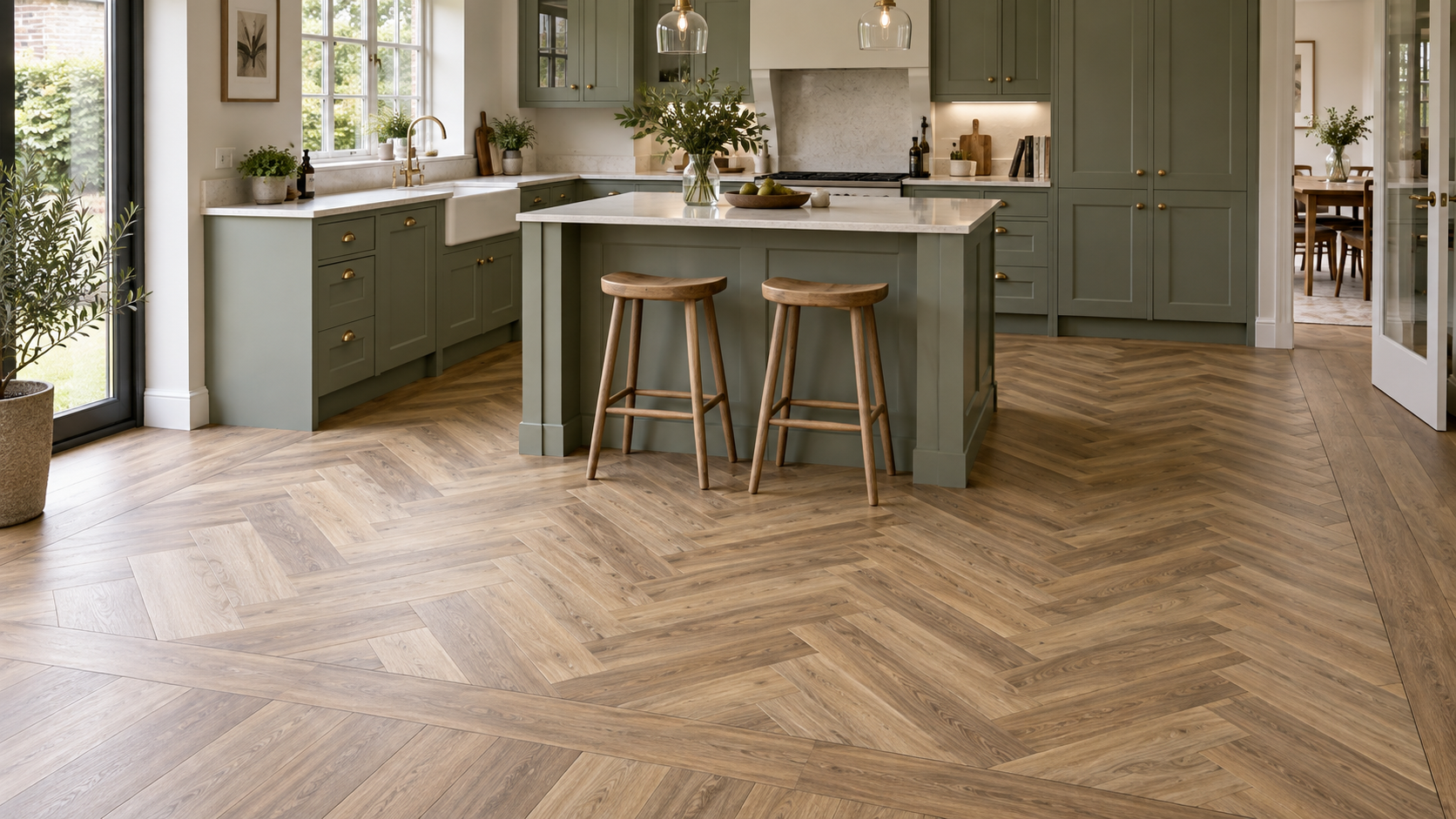
Clean-lined kitchen cabinetry can benefit from the texture and movement of a warm oak-effect herringbone floor. It pairs well with sage green, cream, charcoal or timber cabinets without making the space feel too formal.
Choose an LVT product approved for your kitchen and follow its fitting instructions around islands, fixed units and appliances. LVT can cope well with ordinary surface spills, but the subfloor still needs suitable preparation, and any leaks should be addressed promptly.
Running one herringbone design through a kitchen, dining area and living room can make the spaces feel connected. A moderate wood tone often works especially well because it sits comfortably beside different cabinets, textiles and furniture.
For a large area, think about sightlines from the main entrance and where the pattern will appear centred. The installation format may affect expansion gaps, transitions and the treatment of fixed objects. Discuss the full layout with your fitter before ordering rather than planning each room separately.
A deeper walnut or smoked-oak effect creates contrast against light walls and pale furniture. It can give a living room or dining area a confident, tailored look. Keep larger furniture pieces simple so the floor has room to be the feature.
Dark floors can show dust and light debris more readily in some lighting, so compare samples under both natural and artificial light. If you want depth without a very dark finish, a medium brown oak can provide a softer compromise.
A border can make a herringbone floor feel especially deliberate. A straight-plank perimeter, sometimes paired with a subtle design strip, frames the pattern and can create a crisp finish in a hallway, dining room or snug.
This is a design option for compatible product systems, commonly selected gluedown LVT ranges. Borders and strips add planning, cuts and fitting time, and they are not automatically available with every click floor. Check what your chosen collection supports before settling on the design.
Herringbone does not have to imitate wood. Some LVT collections offer tile or stone looks that can be laid in a herringbone design. A warm limestone effect can suit a bathroom or kitchen, while a softly patterned grey tile can bring a contemporary feel to an entrance.
Because the pattern already adds movement, simpler stone textures often look particularly effective. Check the exact floor’s room suitability and fitting guidance, especially for bathrooms or other moisture-prone areas.
Herringbone LVT can be a good choice for a bedroom if you prefer a hard floor to carpet but still want a cosy look. Try a pale or honey oak effect with layered bedding, a textured rug and warm lighting. An approved acoustic backing or underlay can also be worth discussing where sound matters.
Do not assume every LVT floor needs a separate underlay: some rigid-core products have one attached, while gluedown LVT is installed differently. Follow the product’s instructions. Our guide to whether LVT flooring needs underlay explains the options.
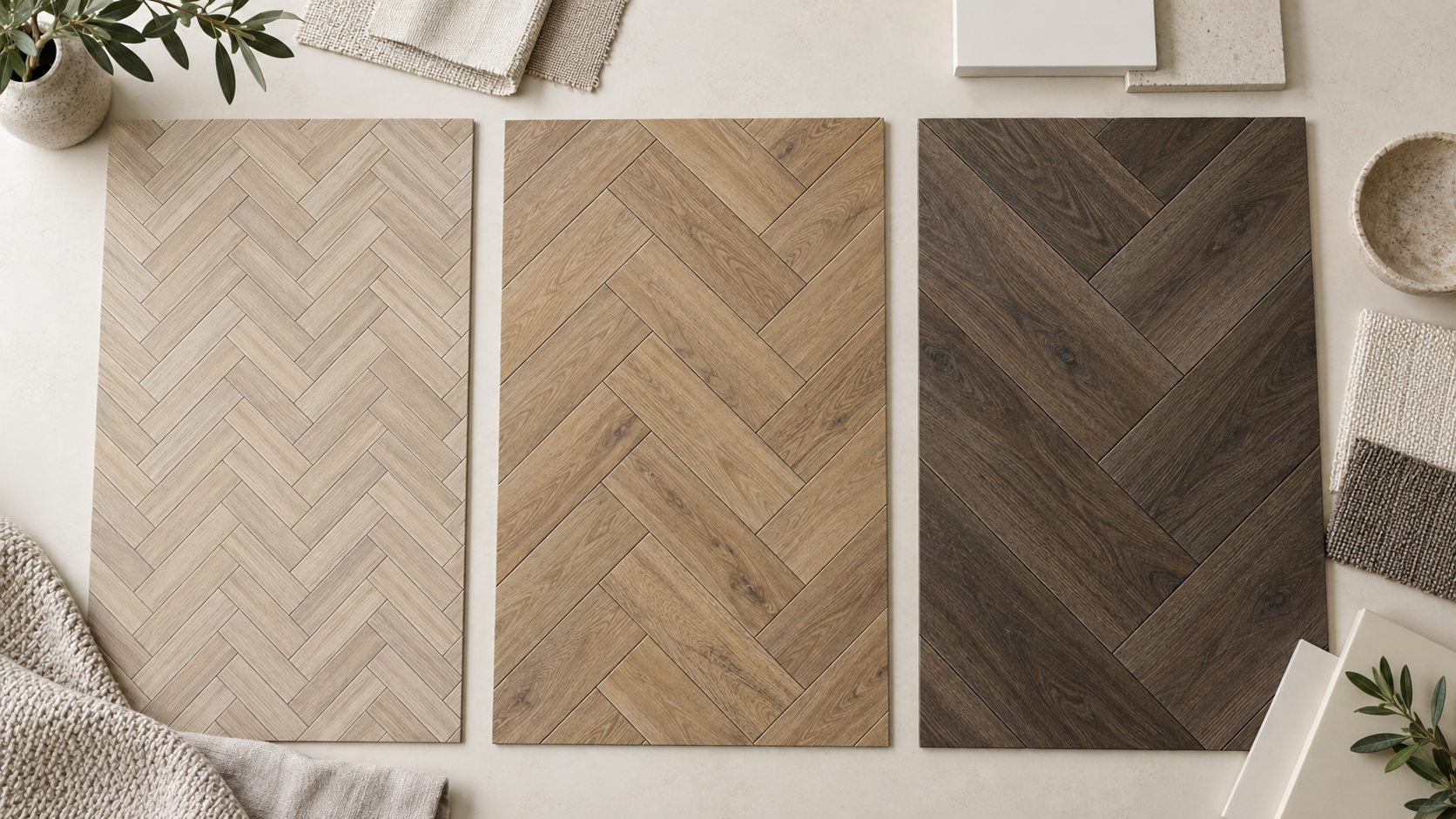
The proportion of the planks changes how strongly you notice the pattern. Smaller planks create more repeats and a detailed parquet feel. Larger planks can produce a broader, calmer effect, particularly in an open-plan room. There is no rule that small rooms must have small planks, but it helps to see a sample area at realistic scale.
Ask these questions before choosing:
A single loose plank cannot show the full effect. Look at a room image, sample panel or digital room visualiser alongside the physical sample.
Both formats can create an attractive herringbone floor, but they are installed differently.
| Format | Useful to know |
|---|---|
| Gluedown LVT | Planks bond to a carefully prepared subfloor; many ranges allow flexible pattern layouts and compatible decorative borders. |
| Rigid-core click LVT | Planks lock together as a floating floor; the specific herringbone system, underlay and expansion details must follow its installation guide. |
Do not assume that a standard straight-lay plank can be fitted in herringbone. Some click patterns require purpose-made profiles or a dedicated herringbone range. Confirm the product is designed for the intended layout before buying.
A good herringbone result starts well before the first plank is laid. The floor should be planned around the room’s focal points, then installed over a subfloor that meets the product’s requirements for flatness, dryness and stability.
Because the pattern involves more angled cuts than a simple straight layout, allow for the manufacturer’s recommended waste and ask your fitter to calculate quantities for your exact room shape. Check threshold details, any border design, underfloor heating compatibility and whether the product is approved for the room. Professional fitting can be especially helpful when you want a carefully centred pattern or a continuous design across several rooms.
Herringbone LVT can be subtle or bold: pale oak brings lightness to a small room, mid-tone wood gives an open-plan home warmth, and a considered border can make a hallway feel finished. The best result comes from choosing the right scale and colour, then planning the layout and installation around your actual space.
At Casa Flooring, we can help you compare herringbone LVT designs and fitting options for your home. Bring your room measurements and a few photos, and we can help you narrow the choices to a floor that looks right from the doorway and works in everyday life.