
If you are planning a new luxury vinyl tile floor, you may have underlay on your shopping list. It is a sensible question: underlay is common beneath laminate, so should it go beneath LVT too?
The answer depends on how your LVT is fitted. Gluedown LVT is normally bonded to a properly prepared subfloor and does not use conventional loose underlay. Some click LVT requires a separate, manufacturer-approved underlay. Other click or rigid-core ranges already have an attached backing and should not have another underlay added underneath.
The product instructions matter more than a general rule. Here is how to work out what your floor actually needs.
Underlay is a layer placed between certain floating LVT floors and the subfloor. Depending on the product, it can help with sound, walking comfort and support for the click joints. It does not make an uneven or damp subfloor ready for installation by itself.
LVT stands for luxury vinyl tile, a broad category that includes wood-effect planks and stone-effect tiles. Products are supplied in different formats, most commonly gluedown and click or rigid-core. Because those formats are fitted differently, the underlay answer changes with them.
| LVT format | Do you usually need a separate underlay? | What to check |
|---|---|---|
| Gluedown LVT | No conventional loose underlay | Approved subfloor preparation, adhesive and any specified specialist acoustic system |
| Click LVT without attached backing | Often yes, if the manufacturer specifies it | Exact underlay approved for the click system |
| Click or rigid-core LVT with attached underlay | Usually no; an extra layer may be prohibited | Product instructions and permitted subfloors |
| Loose-lay LVT | Usually no conventional underlay | Manufacturer’s subfloor, adhesive or tackifier requirements |
These are starting points. Check the installation guide for your exact product before buying materials or fitting the floor.
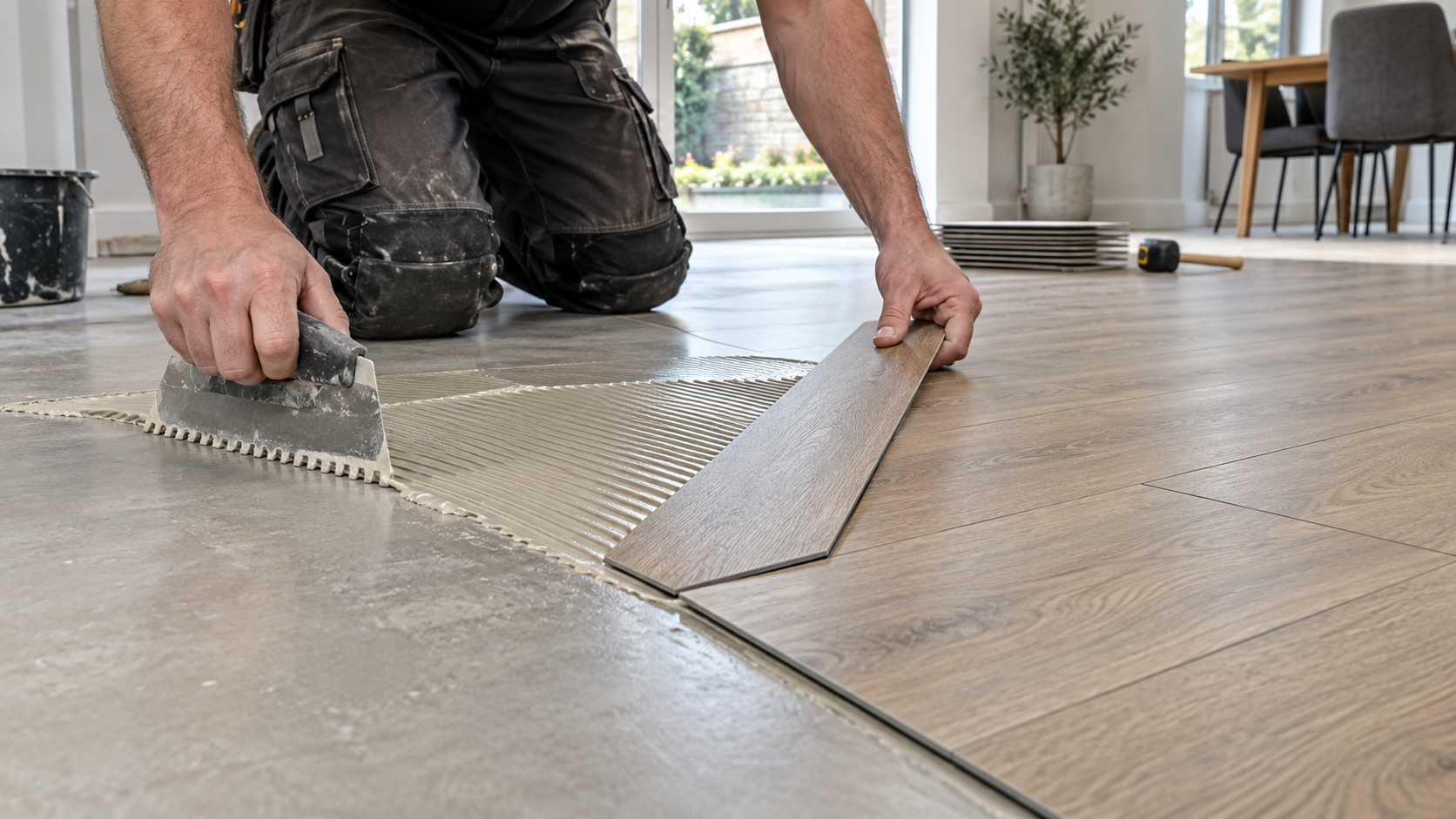
Generally, no. Gluedown LVT is fixed to the prepared subfloor with a suitable adhesive. A loose, cushioned underlay would prevent the planks or tiles from bonding as intended. Amtico, for example, states that its permanently glued LVT does not need underlay.
The subfloor is especially important with this format. It needs to meet the manufacturer’s requirements for dryness, smoothness, stability and cleanliness. A fitter may need a primer, smoothing compound or moisture-control system before applying adhesive. Those preparation products are not the same as putting standard underlay beneath the LVT.
There are specialist, manufacturer-approved acoustic or installation systems for particular gluedown floors. If you need one for sound reduction or another project requirement, use a complete compatible system rather than placing an ordinary foam sheet beneath a gluedown plank.
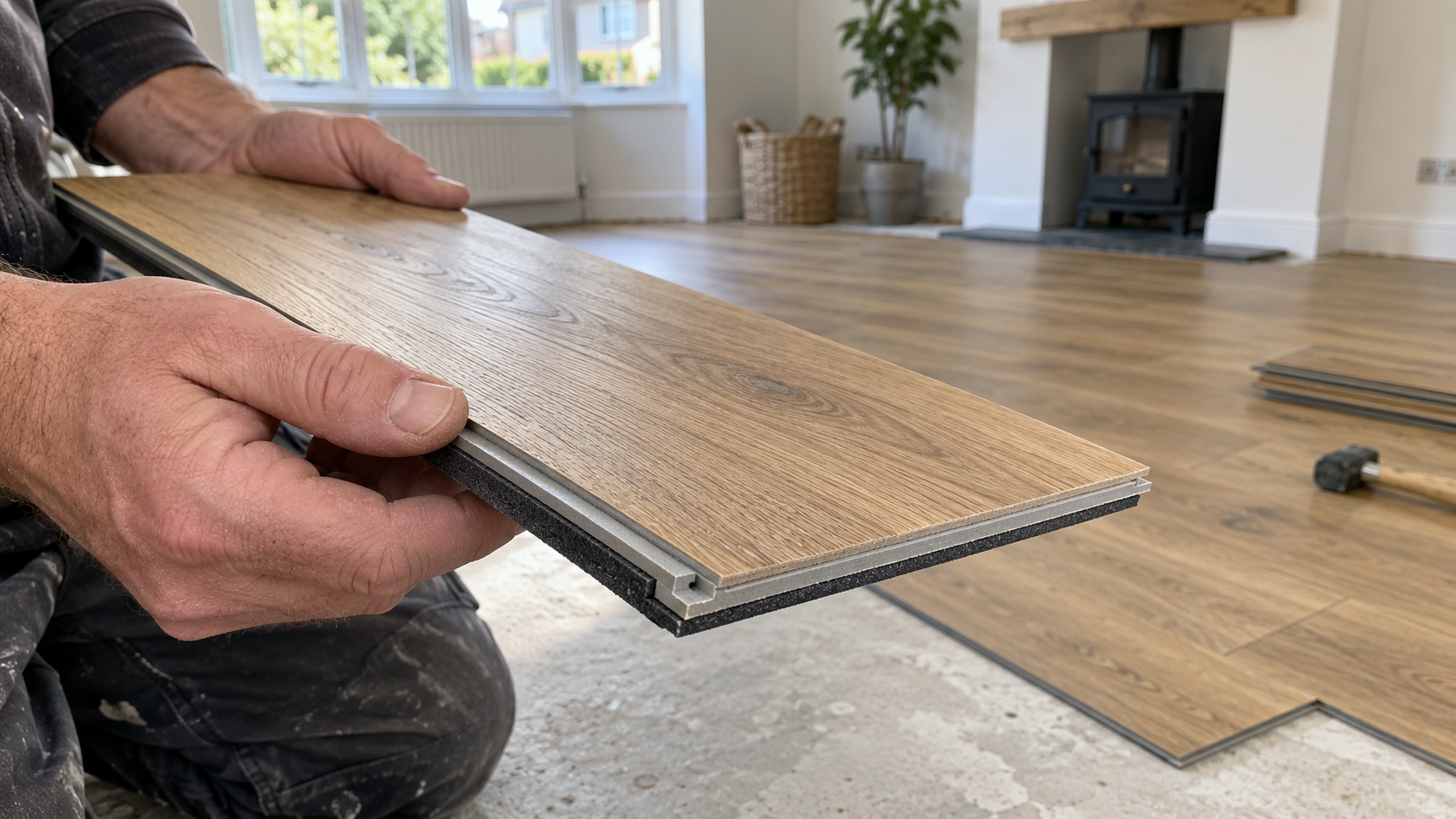
Some click LVT does. A floating click floor locks its planks or tiles together rather than bonding them directly to the base. Where the manufacturer specifies a separate underlay, it must provide the level of support that the locking system needs.
Do not assume that a thicker, softer underlay is an upgrade. Too much movement beneath a click floor can stress the joints. Choose an underlay explicitly approved for the particular LVT range, and follow the instructions for laying and joining it. Quick-Step, for example, gives separate underlay guidance for vinyl floors without an attached pad.
Many rigid-core and click products have an acoustic backing already attached to each plank. In this case, a second loose underlay is often unnecessary and may be disallowed. Quick-Step specifically says that a separate underlay is not allowed beneath its Alpha Vinyl Pad range, while Amtico describes its Click Smart range as having integrated underlay.
Check the product description for terms such as integrated underlay, attached pad or acoustic backing. Then read the installation guide: the attached backing does not remove requirements for a suitable, flat and dry subfloor.
Loose-lay LVT is designed for a particular installation system and typically sits on a prepared subfloor without conventional cushioned underlay. Some products require an approved tackifier or other measures in certain rooms or layouts. Follow the specific manufacturer instructions rather than treating loose-lay planks like click LVT.
Do not substitute laminate underlay without explicit approval from the LVT manufacturer. Laminate and LVT can require different levels of firmness and support. A soft or thick underlay beneath click LVT may allow too much flex at the joints; gluedown LVT normally needs direct adhesion to the prepared base.
Even products labelled “vinyl underlay” are not automatically interchangeable. Check the approved combination of floor, underlay and subfloor. This is particularly important if the floor has an attached pad or a warranty with specific fitting conditions.
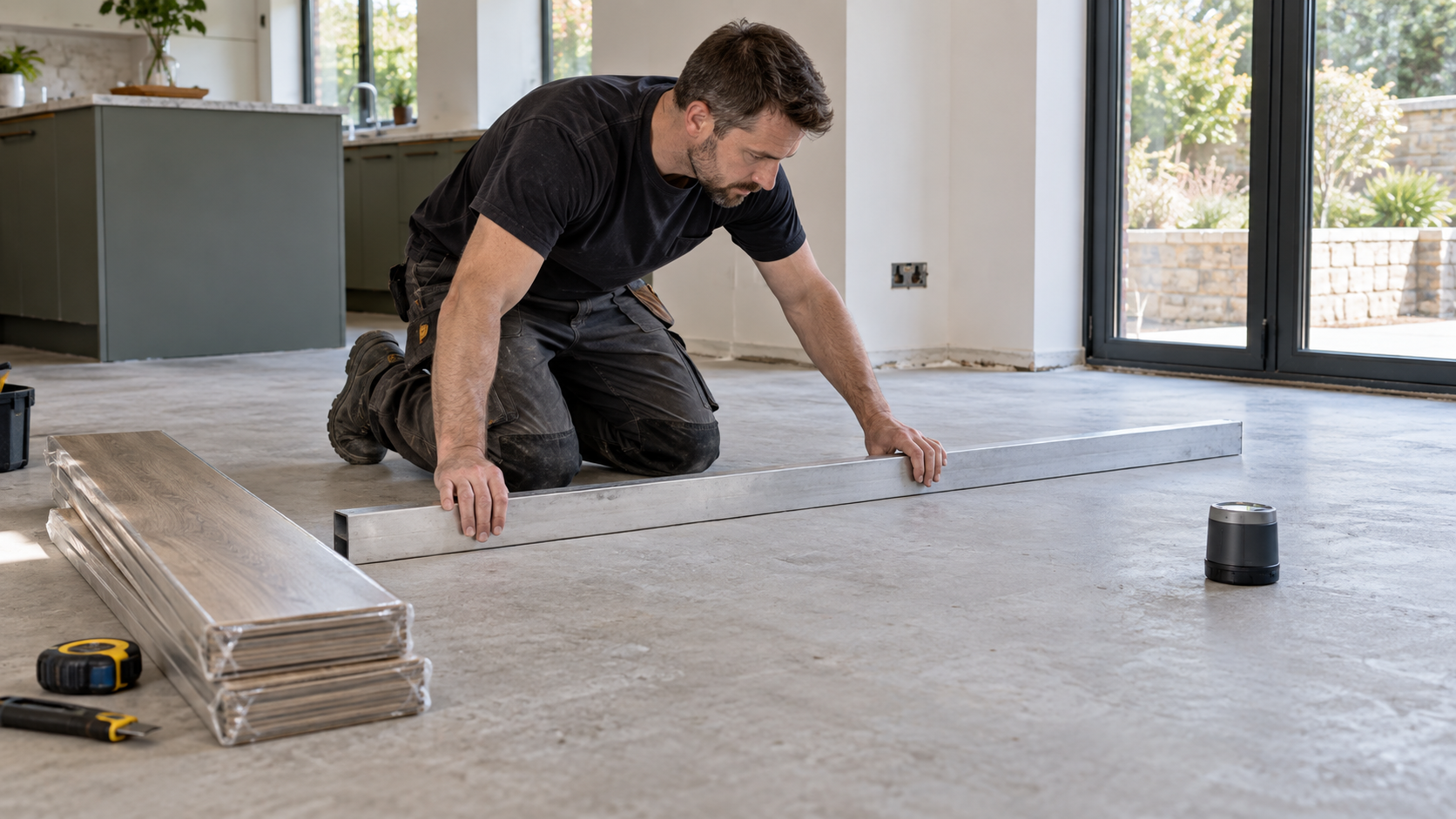
No. Underlay may accommodate the small surface variations allowed by its manufacturer, but it is not a substitute for proper preparation. LVT can reveal imperfections or move underfoot if the base is unsuitable. Gluedown LVT, in particular, needs a carefully smoothed surface.
Before fitting, check that the subfloor is:
The preparation will differ for concrete, screed, timber boards and existing tiles. Your fitter can identify the right approach for the actual base.
LVT planks may resist water spilled on their top surface, but that does not mean moisture rising through a subfloor can be ignored. Excess subfloor moisture can affect adhesives, smoothing compounds, underlay and the installation overall.
A damp proof membrane (DPM) or other moisture-control system has a different job from acoustic or comfort underlay. Which, if any, is needed depends on testing, subfloor construction and the flooring manufacturer’s requirements. Do not add a plastic sheet or liquid DPM based on guesswork; confirm that every layer is compatible.
For more on this distinction, read What Is DPM in Flooring and When Is It Needed?.
An approved underlay or attached acoustic backing can reduce some footfall sound and make a floating floor feel different underfoot. The level of improvement varies by product and floor construction. If you live in a flat or have a specific acoustic requirement, ask for the tested sound rating of the complete flooring system, not just a claim on an underlay pack.
Underlay can also affect how well heat passes through the floor. If you have underfloor heating, check that the LVT, underlay and heating system are approved together, including any temperature limits. Adding an extra layer without checking can change performance.
Start with the floor itself, then work backwards:
If you are replacing an old floor, do not simply reuse its underlay. The new product may require a different support level or no separate underlay at all.
You do not always need underlay for LVT flooring. Gluedown LVT usually needs a properly prepared subfloor and adhesive, rather than conventional underlay. Click LVT may need an approved separate underlay, while products with a factory-attached pad commonly need no extra layer. Loose-lay products have their own fitting rules.
At Casa Flooring, we can help you choose an LVT floor and the right preparation for your room. Bring us the product details and information about your subfloor so we can help you compare suitable fitting options before installation begins.