
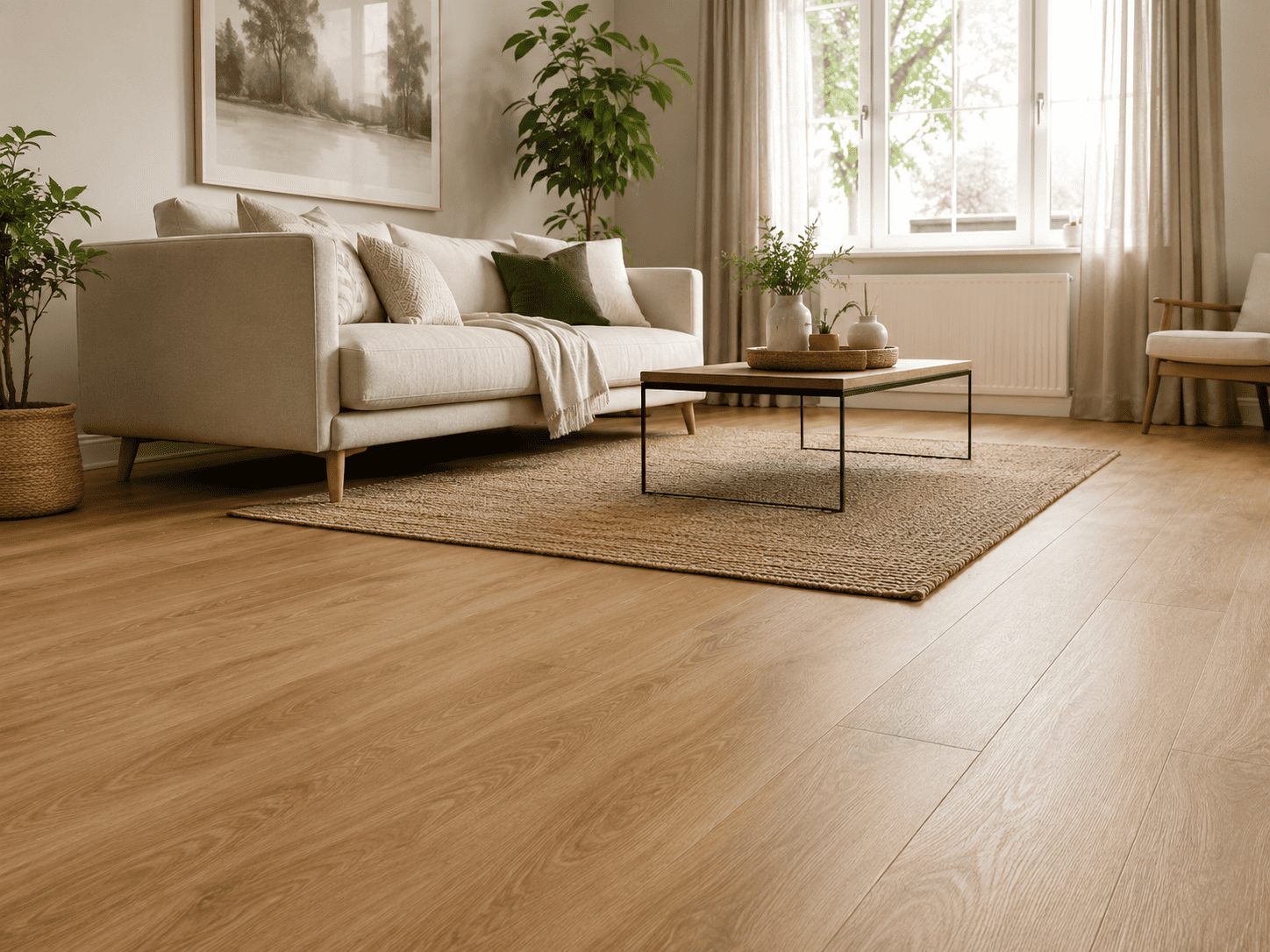
Laminate flooring has become one of the most popular choices for UK homes because it offers the look of wood at a more affordable price than real timber. It is practical, stylish, easy to live with and available in hundreds of colours, plank sizes and finishes.
But not all laminate flooring is the same.
Some products are made for light bedroom use. Others are strong enough for busy hallways, kitchens and family spaces. Some laminate floors are water-resistant. Others should be kept away from bathrooms and wet areas. Some are 6mm thick, while others are 8mm, 10mm or 12mm. Then there are AC ratings, click systems, underlay choices, bevelled edges, embossed textures and fitting accessories to think about.
If you are buying laminate for the first time, it can feel like a lot.
This guide explains everything in plain English. By the end, you will know what laminate flooring is, how to compare products, what thickness to choose, what AC ratings mean, which rooms laminate works best in and what to check before placing an order.
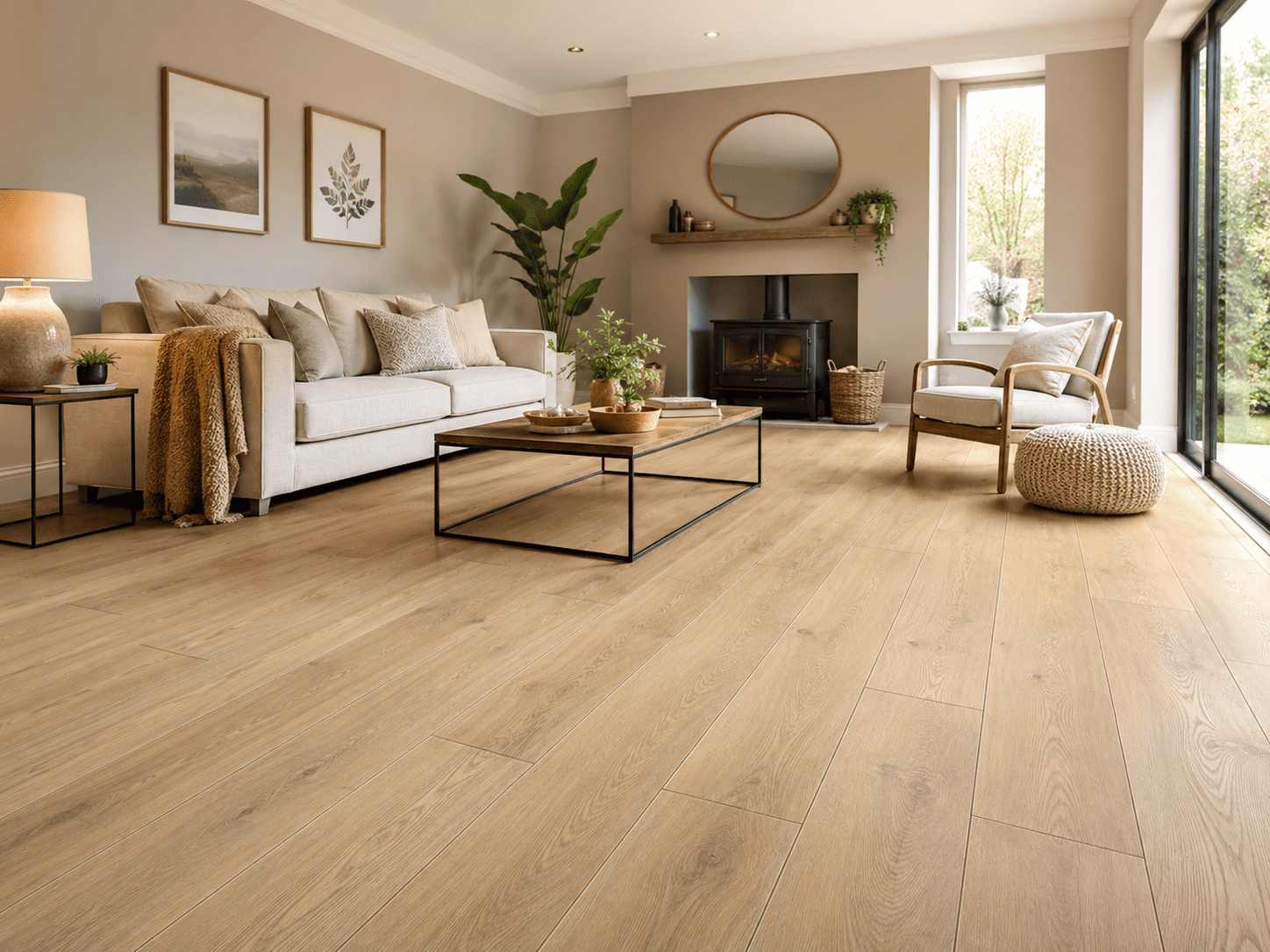
Laminate flooring is a man-made floor covering designed to look like natural wood, stone or tile. It is usually sold in planks that click together to form a floating floor.
A floating floor means the boards are not normally glued or nailed directly to the subfloor. Instead, they lock together and sit over an underlay. This makes laminate a practical choice for many home renovation projects.
Most laminate flooring is designed to recreate the look of wood. Popular styles include oak, grey oak, walnut, herringbone, whitewashed wood and rustic plank designs. Some laminate floors also imitate tiles or stone, although wood-effect laminate remains the most common choice.
Laminate is often chosen by homeowners who want a smart, realistic floor without the cost or maintenance of solid wood.
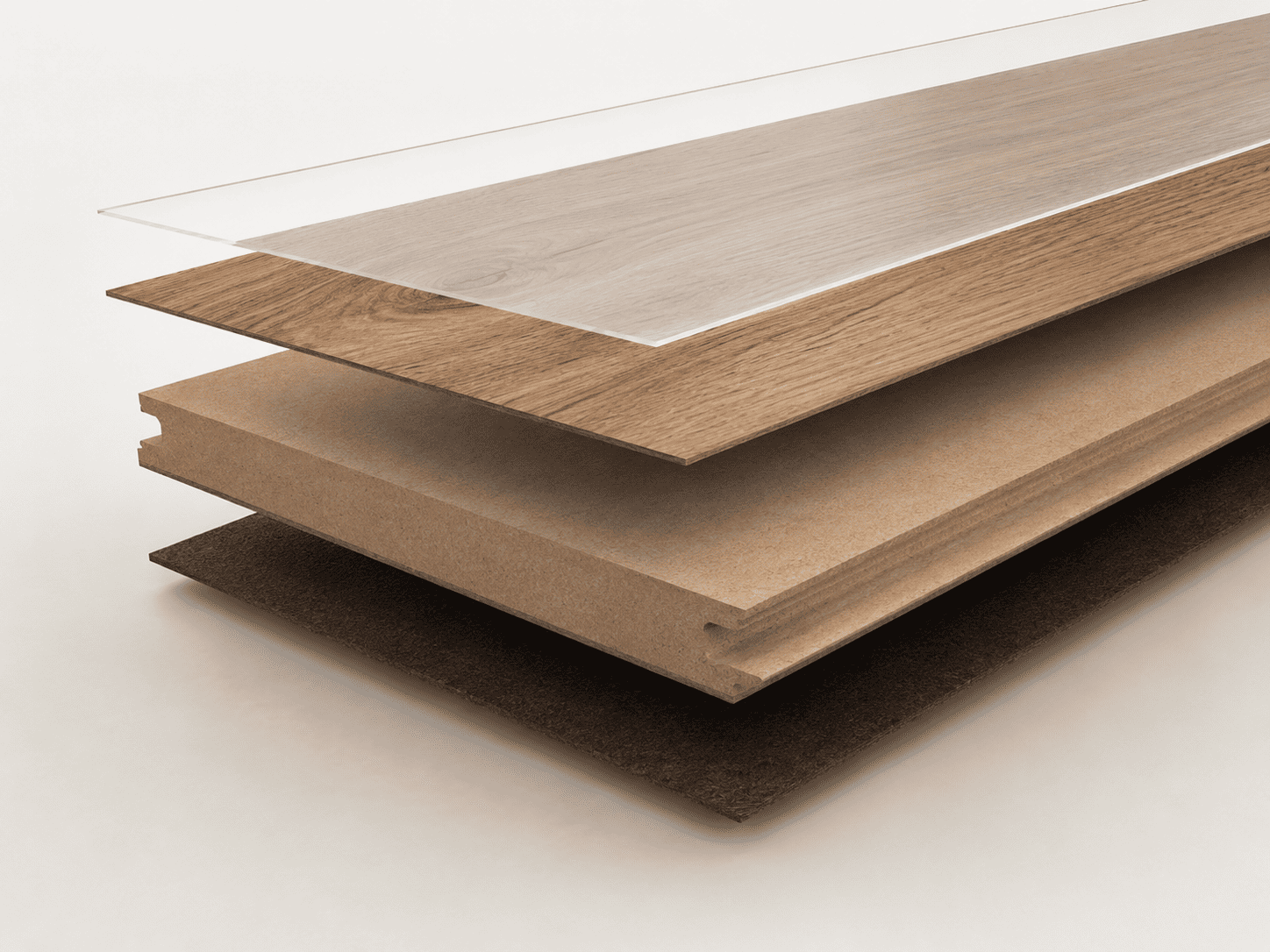
Laminate flooring is made from several layers pressed together. Each layer has a different purpose.
The top layer is a clear protective surface. It helps defend the floor against everyday wear, marks, light scratches and stains.
This is the layer that gives laminate its durability. A stronger wear surface is especially important in busy homes, hallways and living spaces.
The design layer is the printed image that gives laminate its appearance. This is where the wood grain, colour, knots, texture and plank character come from.
Modern laminate designs can look very realistic, especially when the surface texture follows the printed grain.
The core is usually made from high-density fibreboard. It gives the plank its strength and thickness.
A good core helps the board feel solid underfoot and supports the click system along the edges.
The backing layer helps balance the plank and adds stability. It helps reduce the risk of the board bending or warping when installed correctly.
Laminate is popular because it gives homeowners a strong mix of style, value and practicality.
Real wood flooring can be beautiful, but it is usually more expensive and needs more care. Laminate gives you a similar visual effect at a lower price point.
This makes it ideal for homeowners who want a stylish floor across larger areas without going over budget.
Laminate is no longer limited to basic brown planks. You can now choose from a wide range of colours and finishes, including:
This means laminate can work in modern, traditional, Scandinavian, rustic and luxury-style interiors.
Most laminate uses a click-lock system. This can make fitting quicker than some glued or nailed flooring options.
Confident DIY homeowners may choose to install laminate themselves, although professional fitting is still recommended for the best finish, especially in larger rooms, hallways or awkward spaces.
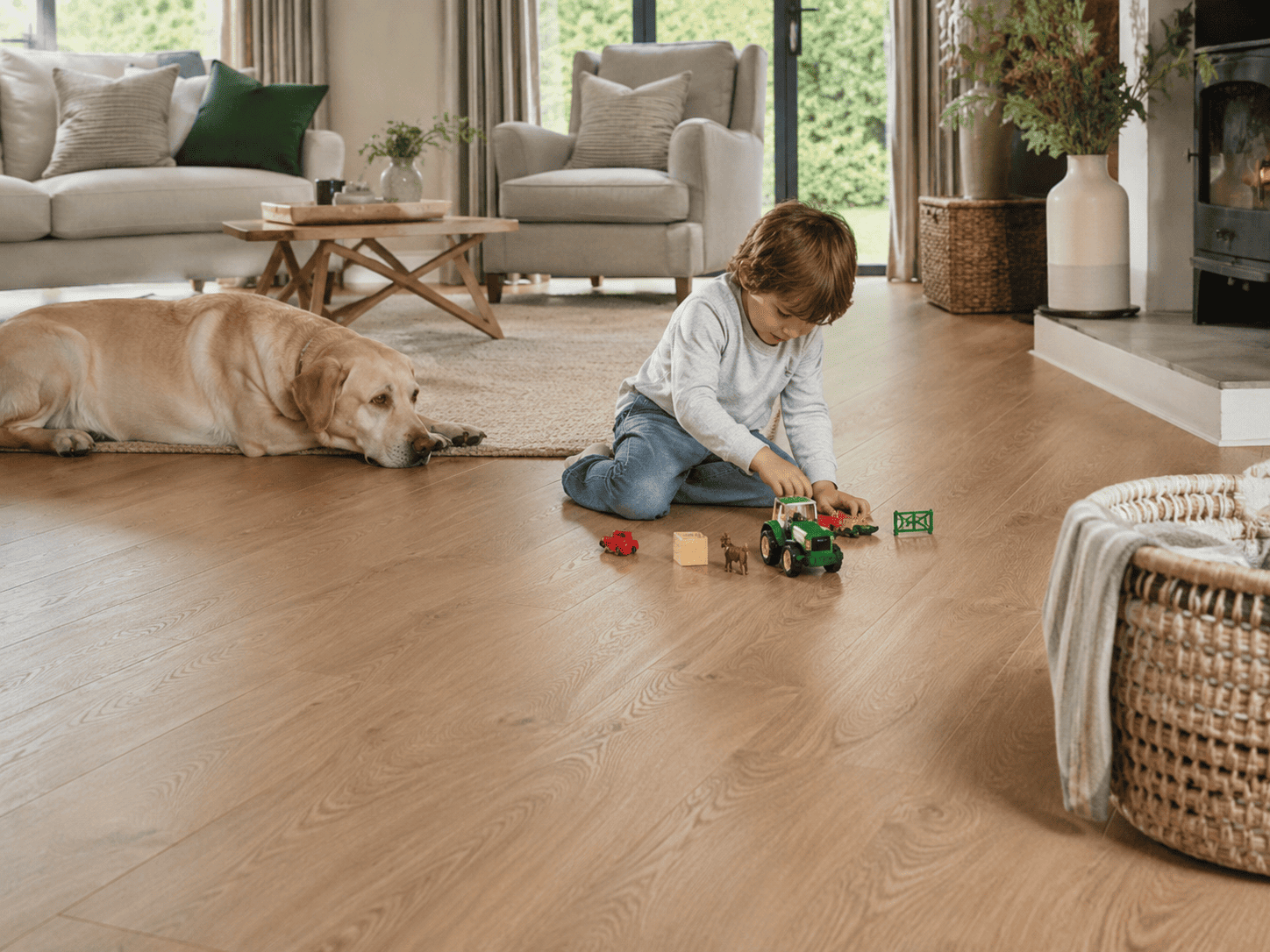
Laminate is a good option for busy households because it is easy to clean and does not trap dust or pet hair like carpet.
It works well in living rooms, bedrooms, dining rooms, hallways, home offices and many family spaces.
A new laminate floor can completely change the look of a room. Light oak can brighten a small space. Herringbone can add a premium look. Grey tones can create a modern feel. Warm wood shades can make a home feel more welcoming.
For many UK homeowners, laminate is one of the most cost-effective ways to upgrade a room.
One of the most important things to check when buying laminate is the AC rating.
AC stands for Abrasion Class. It is a durability rating that helps show how much wear and traffic the floor is designed to handle.
In simple terms, the higher the AC rating, the tougher the surface is expected to be.
AC1 is suitable for very light domestic use. It may work in rooms with little foot traffic, but it is not usually the best choice for busy modern homes.
AC2 is suitable for moderate domestic use, such as quiet bedrooms or occasional rooms. It is not ideal for hallways or busy family spaces.
AC3 is a common choice for general domestic use. It can suit bedrooms, living rooms, dining rooms and some busier home areas.
For many homeowners, AC3 is a sensible starting point.
AC4 is stronger and suitable for heavy domestic use. It is a good choice for hallways, family rooms, home offices, kitchens and homes with children or pets.
If you want a more durable laminate for everyday living, AC4 is often a smart option.
AC5 is designed for heavier wear and can be suitable for commercial spaces as well as very busy homes.
It may be worth considering for rental properties, offices, shops or high-traffic areas. For a quiet bedroom, AC5 may be more than you need.
For most UK homes:
Do not choose only by AC rating, though. Thickness, water resistance, brand quality, underlay and fitting also matter.
Laminate flooring usually comes in several thicknesses. The most common options are 6mm, 7mm, 8mm, 10mm and 12mm.
Thickness does not automatically mean the floor is more scratch-resistant. Scratch resistance is more closely linked to the wear layer and AC rating. However, thickness can affect how the floor feels, sounds and handles slight subfloor variation.
6mm laminate is usually a budget option. It can work in low-traffic rooms if the subfloor is very smooth, but it may feel thinner underfoot.
It is best for short-term projects, spare rooms or low-use areas.
8mm laminate is one of the most popular choices for homes. It offers a good balance between price, comfort and performance.
For many domestic rooms, 8mm laminate with a good AC rating is perfectly suitable.
10mm laminate feels more substantial underfoot and can help reduce the hollow sound sometimes associated with floating floors.
It is a good option for living rooms, dining rooms, hallways and upstairs areas where comfort and sound matter.
12mm laminate is usually the thickest common option. It can feel solid and premium, especially in larger rooms.
It may be useful where you want a stronger feel underfoot, but remember that a well-made 8mm or 10mm laminate can still outperform a poor-quality 12mm product.
Always compare the full specification, not just thickness.
This is one area where buyers need to be careful.
Standard laminate is not the same as vinyl or LVT. Because laminate usually has a wood-based core, too much moisture can cause swelling or edge damage if water gets into the joints.
That does not mean laminate is unsuitable for every kitchen or busy home. Many modern laminate floors offer improved water resistance. However, you must check the product specification carefully.
Standard laminate is best used in dry areas such as:
It should generally be kept away from bathrooms, wet rooms and areas with regular standing water.
Water-resistant laminate can be more suitable for kitchens, utility areas and busy family spaces where occasional spills may happen.
Even with water-resistant laminate, spills should be wiped up quickly. Water-resistant does not mean the floor should be soaked or left wet for long periods.
Laminate can be used in kitchens if the product is suitable and installed properly.
For kitchens, look for:
If your kitchen regularly deals with heavy moisture, pet bowls, washing machine leaks or lots of spills, LVT or vinyl may be a safer choice. But for many normal family kitchens, a good-quality water-resistant laminate can work well.
Standard laminate is usually not recommended for bathrooms or wet rooms. Bathrooms have high moisture, steam and water splashes, which can be risky for wood-based flooring.
Some specialist water-resistant laminate products may be approved for bathrooms, but you should only use them if the manufacturer clearly says they are suitable.
For most bathrooms, LVT or vinyl is usually the more practical option.
Laminate works well in many parts of the home.
Laminate is a strong living room choice because it looks smart, handles everyday foot traffic and is easy to clean. Oak-effect laminate works especially well with neutral interiors and rugs.
Bedrooms are ideal for laminate because they usually have lower traffic. Pale oak, whitewashed wood and warm beige tones can make bedrooms feel calm and spacious.
Laminate is practical for dining rooms because chairs, crumbs and spills are common. Choose a durable AC rating and use felt pads under furniture legs.
Hallways need a tougher laminate because they handle shoes, bags, pets and outdoor dirt. AC4 is a good choice for busy entrances.
Laminate works well in home offices, but chair castors can mark floors over time. Use a protective chair mat and choose a durable surface.
For playrooms, choose a durable laminate with a strong wear layer. It is easy to clean and works well with rugs for added comfort.
The look of your laminate floor can change the whole mood of a room.
Natural oak is one of the safest and most versatile choices. It works with almost any interior style and adds warmth without looking too dark.
Grey laminate gives a modern look. It works well with white walls, black accents and contemporary furniture. Be careful with very cold grey tones, as they can make some rooms feel less warm.
Light oak is ideal for smaller rooms, flats, bedrooms and spaces with limited natural light. It can make a room feel larger and fresher.
Dark laminate can look dramatic and elegant, especially in larger rooms. It works best where there is good natural light and lighter furniture to balance it.
Rustic styles include knots, cracks, grain variation and aged wood effects. They are good for farmhouse, country and traditional homes.
Herringbone laminate creates a premium look and is popular in hallways, living rooms and open-plan spaces. It can make a floor feel more designed and high-end.
Wide planks create a modern, spacious feel. They work particularly well in larger rooms and open-plan areas.
Another detail to check is the plank edge.
Bevelled edges have a small groove between planks. This makes each board look more defined and can create a more realistic wood-floor appearance.
Bevelled edges are especially effective with rustic, oak and wide-plank designs.
Square edges create a smoother, more seamless look. They can be good for modern interiors, but may not always look as realistic as bevelled designs.
Modern laminate can include textured surfaces that follow the printed wood grain. This is often called embossed or registered embossing.
A textured laminate usually looks and feels more natural than a completely flat surface.
When ordering samples, run your hand across the plank. A good surface texture can make a big difference to the overall quality feel.
Underlay is not an afterthought. It affects comfort, sound, moisture protection and the final feel of the floor.
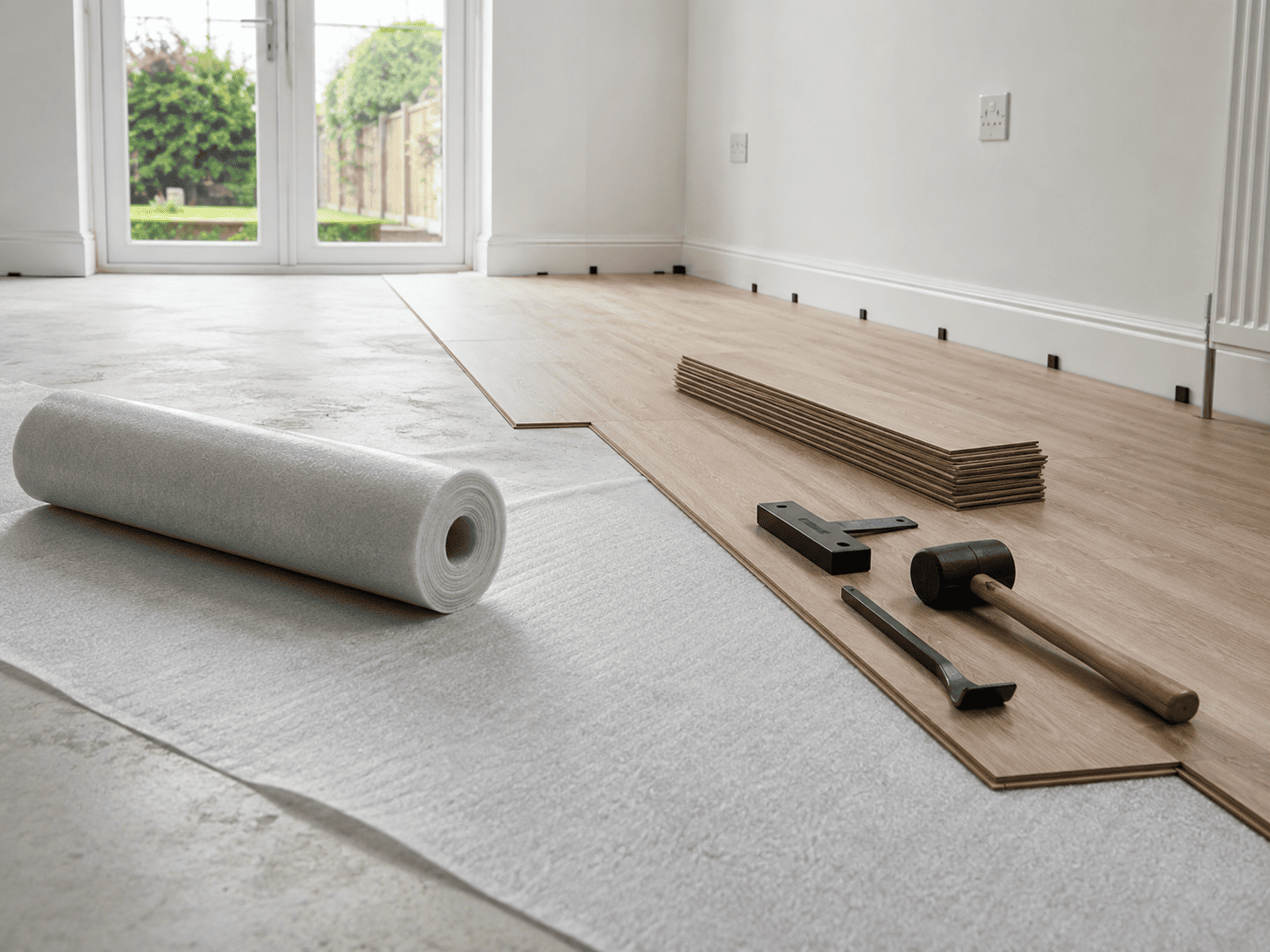
Laminate is usually installed as a floating floor, so it normally needs underlay beneath it.
Foam underlay is a common budget option. It can work in basic rooms where sound reduction and moisture control are not major concerns.
Acoustic underlay helps reduce impact sound. This is useful for upstairs bedrooms, flats, home offices and family homes.
If you are fitting laminate over concrete, a moisture barrier is usually important. Concrete can release moisture, which may damage laminate over time.
Some underlays include a built-in damp proof membrane. In other cases, a separate moisture barrier may be needed.
If you are using underfloor heating, choose an underlay that is suitable for heated floors. The wrong underlay can reduce heat transfer and affect performance.
Always check the flooring and underlay specifications before fitting.
Many laminate floors can be used with underfloor heating, but only if the product is approved for it.
You need to check:
Underfloor heating must be controlled properly. Sudden or excessive heat can affect flooring performance.
Measure the room carefully and add extra for waste.
For a standard straight plank installation, allow around 5% to 10% extra. For herringbone, awkward rooms or diagonal layouts, you may need more.
Do not order the exact room size only. Cutting, mistakes, damaged boards and future repairs all require spare material.
It is also useful to keep one unopened pack after installation. If a board is damaged later, matching the same batch can be difficult.
A laminate flooring project may need more than just boards.
Common accessories include:
For a professional finish, trims and door bars are especially important. They help create neat transitions between rooms and different floor types.
Laminate is easy to look after if you follow a few basic rules.
For regular care:
Too much water is one of the main things to avoid. Laminate can handle normal cleaning, but it should not be drenched.
A floor may look beautiful, but it still needs the right AC rating, thickness and water resistance for the room.
Laminate needs a flat, dry and stable base. If the subfloor is uneven, the finished floor may move, creak or open at the joints.
Budget laminate may be fine for a spare bedroom, but a hallway or kitchen needs a stronger product.
The wrong underlay can make the floor feel noisy, uncomfortable or poorly protected from moisture.
Laminate can look different online compared with your actual room. Natural light, wall colour and furniture all change how the floor appears.
Ordering too little can delay the job and create batch-matching problems.
Standard laminate should not be treated like waterproof vinyl. Always check whether it is suitable for kitchens, bathrooms or utility areas.
Before you buy, check:
This simple checklist can help you avoid costly mistakes.
Laminate flooring is a smart choice for many UK homes. It is stylish, practical, affordable and available in a huge range of realistic wood-effect designs.
The best laminate floor is not always the thickest or most expensive. The right choice depends on where it is going, how much traffic the room gets, whether moisture is a concern and what finish you want.
For bedrooms and quiet rooms, a good AC3 laminate may be enough. For hallways, kitchens, family rooms and home offices, AC4 or higher may be more suitable. If water resistance matters, check the product specification carefully rather than assuming all laminate is suitable.
Underlay, subfloor preparation and accessories also play a big role in the final result. A good laminate floor can look disappointing if fitted over a poor base or finished with the wrong trims.
At Casa Flooring, you can explore laminate flooring, underlay, door bars, trims and fitting accessories to help create a floor that looks good, feels comfortable and suits the way your home is used every day.
Laminate flooring is a layered floor covering designed to look like wood, stone or tile. It usually comes in planks that click together as a floating floor over underlay.
Yes, laminate flooring is a good option for many UK homes. It is affordable, stylish, easy to clean and suitable for bedrooms, living rooms, dining rooms, hallways and home offices.
8mm laminate is a popular choice for general home use. 10mm and 12mm options can feel more solid and may help with sound and stability. Always check AC rating as well as thickness.
AC rating shows how durable the laminate surface is. AC3 is suitable for general domestic use, AC4 is better for busy homes and AC5 is suitable for heavy use or some commercial spaces.
Not always. A high-quality 8mm laminate with a strong AC rating can be better than a poor-quality 12mm product. Compare the full specification, not thickness alone.
Some laminate floors can be used in kitchens, especially water-resistant products. Always check the manufacturer’s guidance and clean up spills quickly.
Standard laminate is usually not suitable for bathrooms or wet rooms. Only use laminate in a bathroom if the product is specifically approved for that purpose.
Yes, most floating laminate floors need underlay. The right underlay can improve comfort, reduce sound and help protect against moisture depending on the subfloor.
Many laminate floors can be used with underfloor heating, but only if the product and underlay are suitable. Always check the manufacturer’s temperature and installation guidance.
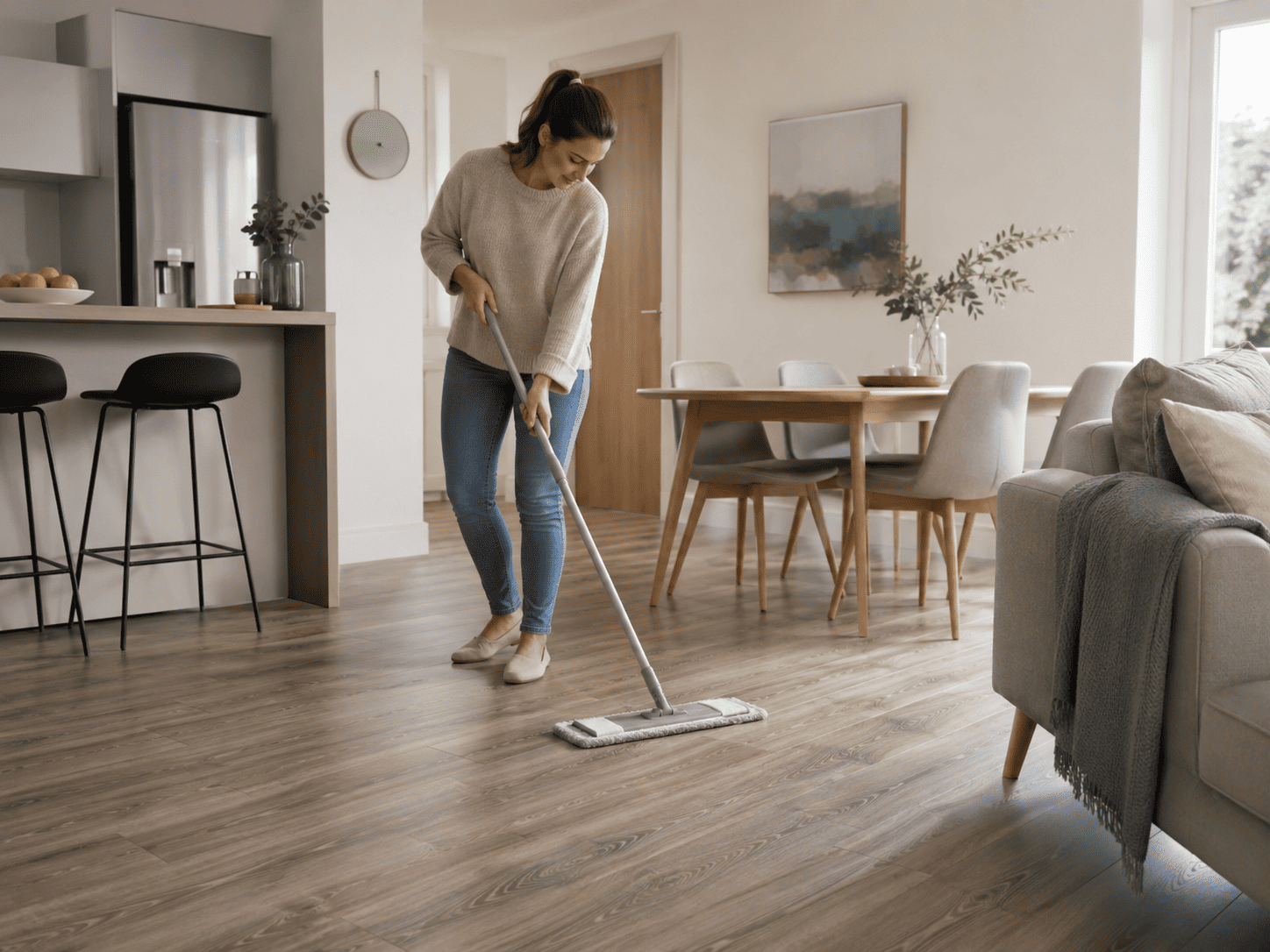
Yes, laminate is easy to clean. Sweep or vacuum regularly and use a slightly damp mop when needed. Avoid soaking the floor or using harsh cleaning methods.