Choosing between LVT (Luxury Vinyl Tile) and laminate flooring is one of the most common decisions homeowners face when updating their interiors. Both options look stylish, are available in a wide range of finishes, and offer great value for money—but they perform very differently in real homes.
In this guide, we’ll break down the key differences between LVT and laminate flooring so you can confidently choose the best option for your space in 2026.
Shop flooring options here:
In this guide:
ToggleLVT (Luxury Vinyl Tile) is a modern flooring solution made from multiple layers of vinyl, designed to replicate natural materials like wood or stone.
Most LVT products include:
A strong protective wear layer (for durability)
A printed design layer (wood, stone, or concrete effects)
A flexible core (for comfort and stability)
LVT is especially popular in busy households and rental properties because it handles spills, moisture, and heavy foot traffic with ease.
Laminate flooring is made from a high-density fibreboard (HDF) core with a photographic layer on top that mimics real wood. It is then sealed with a protective wear layer.
Laminate has been a popular flooring choice for years due to its balance of style and cost-effectiveness.
However, it is important to note that standard laminate is not fully waterproof, which limits where it should be installed.
Here’s how the two flooring types compare in key areas:
Shop kitchen & bathroom flooring
Choosing the right flooring for the right room is essential for long-term performance.
Both LVT and laminate are considered budget-friendly compared to real wood or stone flooring, but there are differences in long-term value.
While laminate may be cheaper initially, LVT often delivers better long-term value in kitchens, bathrooms, and busy households due to its waterproof properties.
In 2026, flooring trends continue to focus on natural, calming interiors.
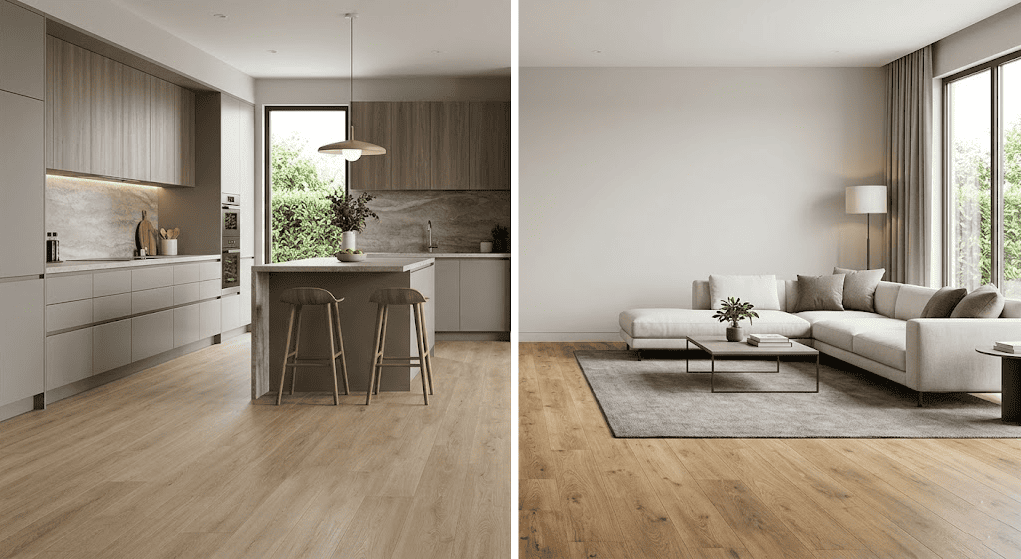
Both flooring types now offer highly realistic finishes, making it difficult to distinguish them from real wood at first glance.
Proper installation is essential for both flooring types.
Before installation, consider:
Products such as latex screeds, primers, and damp-proof membranes can improve performance and extend flooring life.
Poor preparation is one of the most common reasons for flooring failure.
When choosing between LVT and laminate, avoid these mistakes:
Here’s a simple way to decide:
Both options are excellent—it just depends on the room and how the space is used.
LVT is better in wet areas and high-traffic spaces due to its waterproof and durable structure.
It is not recommended for kitchens unless it is a specially treated water-resistant version.
LVT typically lasts longer in moisture-prone or heavy-use environments.
LVT is easier to maintain because it is waterproof and highly resistant to stains.
Both LVT and laminate flooring are excellent choices for modern homes in 2026, but the right option depends on your space, budget, and lifestyle.
If you need waterproof, durable flooring for kitchens or bathrooms, LVT is the clear winner. If you want a cost-effective wood-look finish for dry rooms, laminate remains a strong choice.
At Casa Flooring, you’ll find a wide range of:
You can also order free samples to see how your chosen flooring looks in your own home before making a decision.